
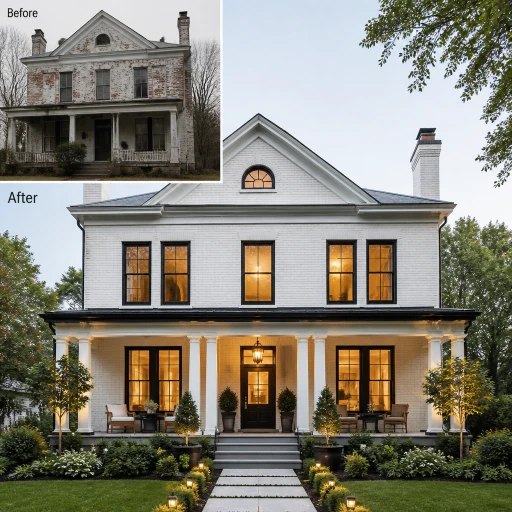
Buy an old house in Savannah, gut it, bring it back to life. It’s practically a local pastime. Whether you picked up a fixer-upper in Ardsley Park, inherited a Victorian near Forsyth Park, or you’re flipping a bungalow on the eastside, there’s a good chance the house will sit empty for months while the work gets done.
And that’s exactly when most owners discover a nasty surprise: the moment a home becomes vacant, your regular insurance can quietly stop covering it.
Vacant renovations insurance — sometimes called vacant home insurance, a vacant dwelling policy, or builders risk coverage for renovations — exists to close that gap. In a city like Savannah, with its hurricane seasons, historic housing stock, and busy renovation market, it’s not a nice-to-have. It’s the thing standing between your project and a financial disaster.
Here’s what you need to know before the first contractor shows up.
The problem: vacant homes fall through the cracks of normal insurance
Most people assume their homeowners policy covers the house no matter what. It doesn’t. Nearly every standard homeowners policy in Georgia includes a vacancy clause. If the home sits unoccupied — typically for 30 to 60 days, depending on the insurer — coverage for key risks like vandalism, theft, water damage, and sometimes even fire can be reduced or excluded entirely.
The insurance company isn’t being petty. Vacant homes genuinely are riskier. Nobody’s there to notice a small roof leak before it rots the subfloor. Nobody hears the window break at 2 a.m. A burst pipe can run for days. Squatters and copper thieves specifically target empty properties, and renovation sites advertise themselves with dumpsters and permit notices taped to the front door.
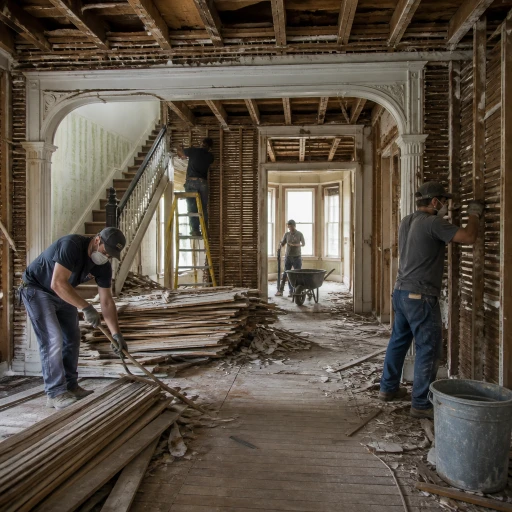
Now add construction to the mix. Open walls, exposed wiring, torches and saws, subcontractors coming and going. Renovation work raises the odds of fire and injury, which is why insurers treat “vacant” and “under renovation” as two separate red flags. A house that’s both? That’s a risk category all its own — and it needs its own policy.
The short version: if your Savannah property will be empty for more than about 30 days during renovation, assume your existing homeowners policy has stopped doing its job — and call your agent to confirm before work begins.
What vacant renovations insurance actually is
Vacant renovations insurance isn’t one single product. It’s usually a combination of coverages tailored to a property that’s both unoccupied and under construction. Depending on your project, that package might include:
- Vacant dwelling coverage — protects the structure itself against fire, lightning, wind, vandalism, and other named perils while the home sits empty.
- Builders risk insurance — covers the renovation work in progress, including materials, fixtures, and supplies on site (and sometimes in transit or storage). If a fire destroys your half-finished kitchen along with $20,000 in cabinets stacked in the dining room, this is what pays.
- Premises liability coverage — protects you if someone is injured on the property. That could be a delivery driver, a curious neighbor, or even a trespasser. Yes, in Georgia, injured trespassers can and do sue property owners.
- Optional add-ons — theft of building materials, equipment breakdown, water damage riders, and coverage for detached structures like carriage houses, which Savannah has in abundance.
Policies are typically written for the length of the project — three, six, or twelve months — with options to renew if the timeline slips. And let’s be honest: in renovation, the timeline always slips.
Why Savannah raises the stakes
You could write a generic article about vacant home insurance for any city in America. Savannah isn’t any city. A few local realities make this coverage matter more here than almost anywhere else.
Hurricane and tropical storm exposure. Savannah sits on the Georgia coast, and every year from June through November, the region watches the tropics. Matthew in 2016 and Irma in 2017 both hammered Chatham County with wind and flooding. Now picture a gutted house mid-renovation when a tropical storm rolls up the coast — tarped roof sections, plywood over window openings, materials stacked in the yard. Wind coverage on a vacant renovation policy isn’t optional here; it’s the whole point. (Keep in mind that flood insurance is separate — a policy through the National Flood Insurance Program or a private flood carrier is worth discussing if the property sits in one of Savannah’s many flood zones.)
Old housing stock. A huge share of Savannah’s homes were built before 1950, and many predate 1900. Old houses hide old problems: knob-and-tube wiring, brittle cast-iron drain lines, balloon framing that lets fire race from basement to attic. Renovating them is rewarding, but the risk profile is nothing like remodeling a 2005 tract home. Insurers know it, and unprotected owners learn it the hard way.
Heat, humidity, and mold. Coastal Georgia humidity doesn’t take a day off. In an occupied home, the HVAC keeps moisture in check. In a vacant one with the power cut and the windows sealed, mold can bloom across fresh drywall in weeks. Some vacant property policies address mold and water damage differently than others — a detail worth asking about specifically.
Historic district timelines. If your property sits in the Landmark Historic District or another protected area, exterior changes generally need approval from the Historic Preservation Commission before work can start. That review process is good for the city, but it stretches project timelines — and every extra month of review is another month your house sits vacant. What an owner planned as a 90-day cosmetic refresh can easily become a six- or nine-month project once permits, approvals, and specialty tradespeople enter the picture. Longer vacancy means longer exposure, which is exactly why these policies are written with flexible, renewable terms.
Theft and vandalism. Copper wiring, HVAC condensers, appliances still in the box — renovation sites are shopping lists for thieves, and vacant homes in transitional neighborhoods are frequent targets. Standard homeowners policies often exclude vandalism entirely after a vacancy period. A proper vacant renovation policy puts that protection back.
Two Savannah scenarios that happen all the time
The inherited house. Maria inherits her grandmother’s home near Daffin Park. It needs a new roof, updated electrical, and a kitchen from this century before anyone can live in it. The house sits empty for eight months while she saves and schedules contractors. Grandma’s old homeowners policy is still technically active — but because the home has been vacant well past the 60-day mark, the insurer denies the claim when vandals kick in the back door and steal the copper. Maria eats the loss.
The flip. A local investor buys a bungalow off Waters Avenue, planning a four-month renovation and resale. Two months in, a subcontractor’s grinder throws sparks into sawdust and half the structure burns. Without builders risk coverage, the investor loses the purchase price, the completed work, and the materials — easily a six-figure hit. With it, the carrier pays to rebuild, and the project survives.
Neither of these is exotic. Ask any Savannah insurance agent or contractor and they’ll tell you versions of both stories, with local street names attached.
Renovating a vacant property in Savannah?
Get a vacant renovations insurance quote before the first hammer swings. It takes a few minutes and could save your entire project.Get Your Free Quote
What does vacant renovations insurance cost in Savannah?
There’s no single answer, but here’s the honest framing: vacant property insurance typically costs more than standard homeowners coverage — often 1.5 to 3 times as much — because the risk is genuinely higher. For many Savannah projects, that works out to somewhere in the low-to-mid thousands per year, prorated for shorter policy terms.
Several factors move the number up or down:
- The scope of work. Cosmetic updates price differently than a full gut with structural changes.
- The property’s age and condition. A pre-1900 frame house in the Victorian District carries different risk than a 1980s ranch in Georgetown.
- Location. Proximity to the coast, flood zone designation, and neighborhood crime patterns all factor in.
- Security measures. Fencing, cameras, alarms, and regular site visits can meaningfully lower your premium.
- Coverage limits and deductibles. Insuring the full replacement cost plus materials costs more than insuring purchase price alone — but underinsuring defeats the purpose.
Compare that premium to the alternative. A single denied fire or theft claim on an uninsured vacant property can wipe out years of expected profit on a flip, or turn an inheritance into a debt. Measured against the project budget, the coverage is usually one of the smaller line items — and the only one that can pay you back a hundred times over.
Common mistakes Savannah renovators make
Assuming the contractor’s insurance covers the house. It doesn’t. Your general contractor’s liability policy covers their negligence and their people. It does not cover your structure against wind, theft, vandalism, or a fire that starts from an unknown cause. You still need your own coverage — though you should absolutely verify that every contractor on site carries liability insurance and workers’ comp, and get certificates in writing.
Staying quiet and hoping. Some owners figure they just won’t mention the vacancy to their insurer. Bad plan. If you file a claim and the adjuster discovers the home was vacant and under renovation — which they will, because investigating is their job — the claim can be denied and the policy canceled. Misrepresentation can even void coverage retroactively.
Waiting until something feels risky. Coverage needs to start the day the house goes vacant or the day work begins, whichever comes first. Losses have a way of showing up in week one.
Forgetting liability. Property damage gets all the attention, but the lawsuit from a neighbor’s kid who wandered onto the site and fell through a floor can dwarf any repair bill. Make sure premises liability is part of the package, not an afterthought.
Letting the policy lapse mid-project. Renovations run long. If your six-month policy expires in month seven while the permits are still open, you’re right back to zero. Calendar the renewal date the day you bind coverage.
How to get the right policy (without the headache)
Start with an independent insurance agency that knows the Savannah market. Vacant and renovation policies are specialty products — many big-name carriers don’t write them at all, and the ones that do vary widely in what they cover. A local independent agent can shop multiple carriers and match the policy to your actual project instead of forcing your project into a one-size-fits-all form.
When you talk to an agent, have a few things ready: the property address, the purchase price or current value, a rough scope and budget for the renovation, your expected timeline, and any security measures on site. Then ask pointed questions. Is vandalism covered? Theft of materials? Wind? What happens if the project runs long? Is the policy written on an actual cash value or replacement cost basis? The answers matter more than the premium.
The bottom line
Savannah rewards people who restore its houses. The city’s charm is built, block by block, by owners willing to take on sagging porches and hundred-year-old plaster. But between the day you close and the day someone moves in, that house is exposed in ways your regular insurance was never designed to handle.
Vacant renovations insurance fills the gap. It protects the structure while it’s empty, the materials and work while they’re in progress, and you personally if someone gets hurt along the way. In a coastal city with old housing stock and an active storm season, that protection isn’t paranoia — it’s just how experienced renovators operate.
Before your project starts (or if it already has and you’re now feeling a little uneasy), get a quote and see exactly what coverage would cost for your property. It’s one of the cheapest forms of peace of mind in the entire renovation budget.
Protect your Savannah renovation today
Answer a few questions about your property and get a vacant renovations insurance quote tailored to your project.Get a Vacant Renovations Insurance Quote
Some images are royalty-free stock photography via Pexels. This article is for general information only and isn’t insurance, legal, or financial advice — coverage details vary by carrier and policy. Talk to a licensed Georgia insurance agent about your specific situation.