
Run a business in Savannah long enough and you learn two things. First, this city is good to small businesses — locals are loyal, and the tourists never stop coming. Second, the weather here doesn’t care how hard you’ve worked.
One tropical storm off the Atlantic, one kitchen fire on a busy Friday, one break-in overnight, and everything you’ve built is suddenly on the line. That’s the problem commercial property insurance exists to solve.
This guide walks through what commercial property insurance in Savannah, GA actually covers, what it leaves out, what it tends to cost here on the coast, and how to make sure your policy fits your business instead of somebody else’s.
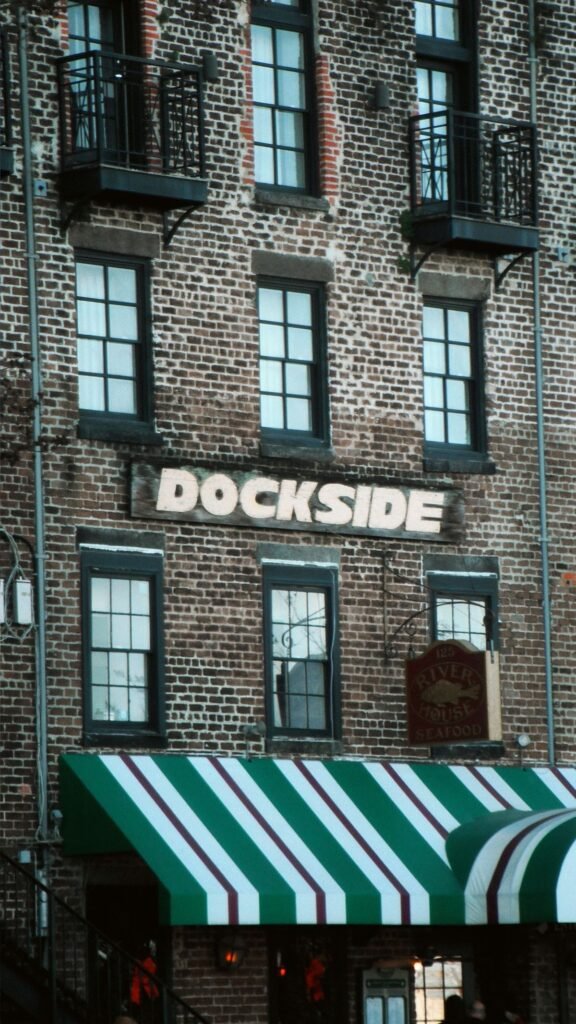
Commercial Property Insurance, Defined Simply
Commercial property insurance protects the physical stuff your business owns or is responsible for. Think of it as homeowners insurance for your business — the building, the equipment inside it, the inventory on the shelves, the signage out front.
If a covered event damages or destroys that property, the policy pays to repair or replace it. Covered events (insurers call them “perils”) typically include fire, windstorms, hail, theft, vandalism, and certain types of water damage, like a burst pipe.
Here’s the part many Savannah business owners miss: you don’t have to own your building to need this coverage. A boutique renting space on Broughton Street still owns its inventory, fixtures, point-of-sale system, and any build-out improvements it paid for. If a fire next door spreads, the landlord’s policy covers the landlord’s building — not your stuff. Business property insurance covers yours.
What Does Commercial Property Insurance Cover?
Most policies bundle a few types of protection. Understanding each one helps you spot gaps before a storm does.
Your building
If you own your commercial space, the policy covers the structure itself — walls, roof, plumbing, electrical, HVAC, and permanently installed fixtures. In Savannah’s Historic District, where many commercial buildings date back a century or more, this piece deserves extra attention. Rebuilding a 1890s brick storefront to historic standards costs far more than putting up a modern equivalent, and your coverage limit needs to reflect that.
Business personal property
This is everything inside: inventory, furniture, computers, kitchen equipment, tools, display cases. A restaurant on Bay Street might have $150,000 in kitchen equipment alone. A dental practice on the southside could easily top that in chairs and imaging machines. Take a real inventory — most owners underestimate what they’d need to replace.
Other people’s property in your care
A repair shop holding customers’ equipment, a dry cleaner full of other people’s clothes, a marina storing boats — if you’re responsible for property that isn’t yours, ask specifically about this coverage. It’s not always automatic.
Business interruption coverage
Often the most valuable piece, and the most overlooked. If a covered loss shuts you down, business interruption (or “business income”) coverage replaces lost revenue and keeps paying rent, payroll, and loan payments while you rebuild.
Picture a café near Forsyth Park that takes serious wind damage in September. Repairs take four months. Property coverage rebuilds the space — but who pays the staff and the lease during those four months of zero sales? That’s business interruption coverage doing its job. For a lot of businesses, the downtime is more financially dangerous than the damage itself.
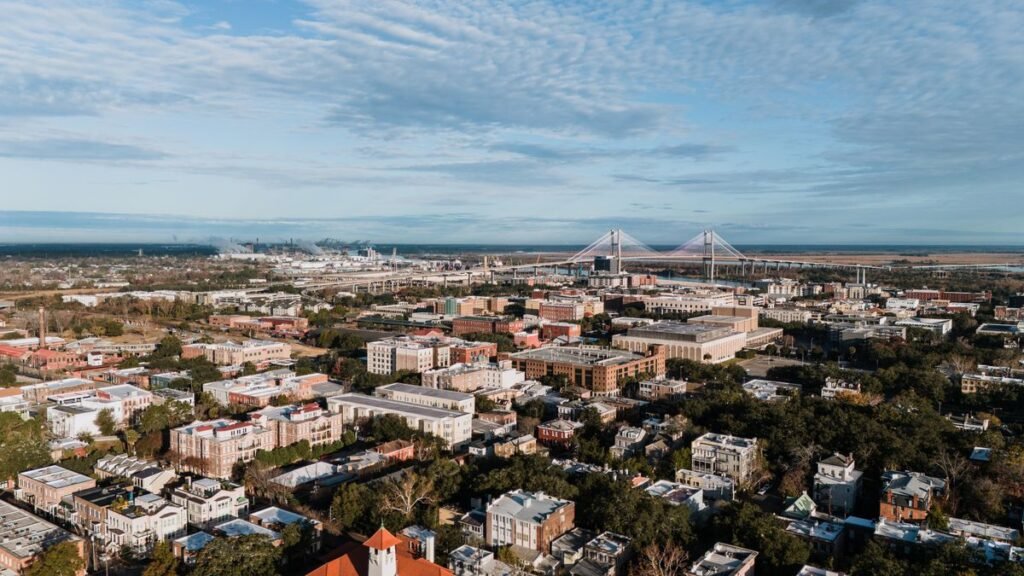
What’s Not Covered — Read This Twice
Standard commercial property policies have exclusions, and in coastal Georgia, two of them matter enormously.
Flood damage
This one surprises people every single year. Standard commercial property insurance does not cover flooding — not storm surge off the Savannah River, not rising water from a tropical system stalling over Chatham County, not a downpour that overwhelms the drains on a low-lying street.
Flood coverage comes from a separate flood insurance policy, either through the National Flood Insurance Program (NFIP) or a private flood insurer. Given how much of Savannah sits at or near sea level, plenty of local businesses need both policies. If your building is in a FEMA-designated flood zone and you have a commercial mortgage, your lender will likely require it anyway.
Wind deductibles
Wind is usually covered — but along the Georgia coast, hurricane and windstorm damage often carries a separate, higher deductible. Instead of a flat $2,500, you might see a deductible of 2% to 5% of your building’s insured value. On a $600,000 building, a 5% wind deductible means you’re covering the first $30,000 of hurricane damage yourself.
That’s not a reason to panic. It’s a reason to know your number before a storm, not after.
Other common exclusions
- Wear and tear. Insurance covers sudden events, not a roof that slowly aged out.
- Earthquake damage. Rare here, but excluded unless added.
- Vehicles. Company trucks and vans need commercial auto insurance.
- Employee injuries. That’s workers’ compensation.
- Lawsuits. Slip-and-falls and similar claims fall under general liability insurance.
Quick gut check: If you can’t say for certain whether your policy includes flood coverage and what your hurricane deductible is, it’s worth a fifteen-minute conversation with an agent. Those two details decide how most coastal claims actually play out.
Why Savannah Businesses Face Different Risks Than Most of Georgia
Insurance is priced on risk, and Savannah’s risk profile looks nothing like Macon’s or Atlanta’s. A few local realities shape both what you pay and what you need.
Hurricanes and tropical storms. Savannah has been fortunate compared to some coastal cities, but Hurricane Matthew in 2016 and Irma in 2017 were expensive reminders that “fortunate” isn’t a strategy. Even a storm that passes offshore can drop trees onto roofs, knock out power for days, and flood streets across the Lowcountry.
Flood-prone geography. Much of the city sits barely above sea level, and drainage struggles during heavy rain even without a named storm. Businesses near the river, on the islands, or in low-lying pockets midtown carry real flood exposure that a standard policy simply won’t touch.
Historic buildings. The Historic District is a huge part of what makes Savannah’s economy work — and historic construction is expensive to repair correctly. Older wiring, plaster walls, heart-pine framing, and preservation requirements all push replacement costs up. Insuring a historic building for what a generic building would cost is one of the most common (and most painful) underinsurance mistakes in town.
Tourism-driven revenue. If your business lives on foot traffic — tours, restaurants, inns, galleries — a two-month closure during peak season hurts far more than the same closure in a slow month. That makes business interruption limits worth extra thought here.
How Much Does Commercial Property Insurance Cost in Savannah, GA?
The honest answer: it depends on your building, your business, and your coverage. But here’s a realistic frame.
Small, low-risk businesses — say, a consultant leasing a small office with modest equipment — might pay somewhere in the range of $500 to $1,500 a year for property coverage. A restaurant, retail shop, or business that owns its building will typically land higher, often between $1,500 and $5,000 annually. Larger buildings, waterfront locations, or older historic structures can run well beyond that.
Coastal location generally adds cost compared to inland Georgia. The factors that move your premium most:
- Location and flood zone. Distance from the coast and FEMA zone designation both matter.
- Building age and construction. A newer building with a recent roof, updated wiring, and hurricane-rated features costs less to insure than a 120-year-old structure that hasn’t been updated.
- What you do. A commercial kitchen carries more fire risk than an accounting office, and premiums reflect it.
- Coverage limits and deductibles. Higher limits cost more; higher deductibles bring premiums down.
- Protective features. Sprinklers, monitored alarms, storm shutters, and impact-rated windows can all earn discounts.
- Claims history. A clean record helps your rate.
The trap to avoid is shopping on price alone. A cheap policy with a low building limit, no flood coverage, and a 5% wind deductible isn’t a deal — it’s a bill you haven’t received yet.
Get a Commercial Property Insurance Quote
Replacement Cost vs. Actual Cash Value: One Choice That Changes Everything
When you buy a policy, you’ll choose how losses get valued, and the difference is huge.
Actual cash value (ACV) pays what your property was worth at the time of loss — replacement cost minus depreciation. Your seven-year-old commercial oven might be valued at $3,000 even though a new one costs $12,000.
Replacement cost value (RCV) pays what it costs to replace the property with new equivalents, no depreciation deducted. Premiums run higher, but after a major loss, RCV is usually what actually gets a business reopened.
For most Savannah businesses — especially anyone with aging equipment or a historic building — replacement cost coverage is worth a serious look. For historic structures, ask about ordinance or law coverage too, which helps pay the extra cost of rebuilding to current codes and preservation requirements.
Do You Need a Standalone Policy or a BOP?
Many small businesses in Savannah don’t buy commercial property insurance by itself. They buy a business owners policy (BOP), which bundles commercial property, general liability, and business interruption coverage into one package — usually at a better price than buying each separately.
A BOP fits most small retail shops, offices, restaurants, salons, and service businesses. Larger operations, or businesses with unusual risks, often need a standalone commercial property policy with customized limits instead. A local agent can tell you quickly which side of that line you fall on.
Getting the Right Coverage (and Keeping the Premium Reasonable)
A few practical moves that pay off for Savannah business owners:
- Insure to true replacement cost, not market value. What your building would sell for and what it costs to rebuild are different numbers — often wildly different for historic properties. Get a real replacement cost estimate.
- Document everything now. Walk through your business with your phone. Video every room, open the storage closets, capture serial numbers on major equipment, and store it all in the cloud. After a loss, that footage turns a slow, contested claim into a fast one.
- Ask about flood coverage explicitly. Don’t assume. Get a yes or no in writing, and if it’s no, get a flood quote. NFIP policies also carry a 30-day waiting period — you can’t buy one when a storm is already on the map.
- Know your wind deductible in dollars. Percentages hide the real number. Do the math once so a hurricane claim never surprises you.
- Harden the building. Storm shutters, a newer roof, monitored alarms, and sprinklers reduce risk and often reduce premiums. Ask which upgrades your insurer actually credits before you spend.
- Review your policy every year. Bought new equipment? Renovated? Added a second location? Your coverage should grow with your business. An outdated limit is the quietest way to end up underinsured.
- Work with someone who knows the coast. An independent agent who writes coastal Georgia business insurance every day can compare multiple carriers and knows which ones handle hurricane claims well — knowledge you only otherwise get the hard way.
Quick Answers to Common Questions
Is commercial property insurance required in Georgia? Not by state law. But commercial lenders almost always require it on mortgaged buildings, and most landlords require tenants to carry coverage for their contents and liability.
Does it cover hurricanes? Wind damage, generally yes — subject to that separate wind or hurricane deductible. Storm surge and flooding, no. That takes a separate flood policy.
Does renters’ business coverage exist? Yes. If you lease your space, you insure your business personal property, improvements you’ve made, and lost income. The landlord insures the structure.
How fast can I get covered? Standard property coverage can often bind within days. Flood insurance through the NFIP typically has a 30-day wait, so don’t put it off until hurricane season is underway.
The Bottom Line
Commercial property insurance in Savannah, GA isn’t complicated once you strip away the jargon. It protects your building, your equipment, your inventory, and — with business interruption coverage — the income that keeps your doors open while you recover. The catch is that coastal Georgia adds wrinkles a generic policy doesn’t handle well: flood exclusions, hurricane deductibles, and historic buildings that cost real money to rebuild right.
You’ve put too much into your business to leave those details to chance. Get a policy built for where you actually operate.
Protect What You’ve Built in Savannah
Get a customized commercial property insurance quote from a team that knows coastal Georgia. It takes just a few minutes, and there’s no obligation.Get Your Free Quote