
Think about where your business physically sits. A storefront a few blocks from the Savannah River. A warehouse in the port corridor of Garden City or Port Wentworth, where the land is flat and the water table isn’t far down. A restaurant on Tybee. A shop near a drainage canal in Pooler that’s fine 360 days a year — and a problem the other five.
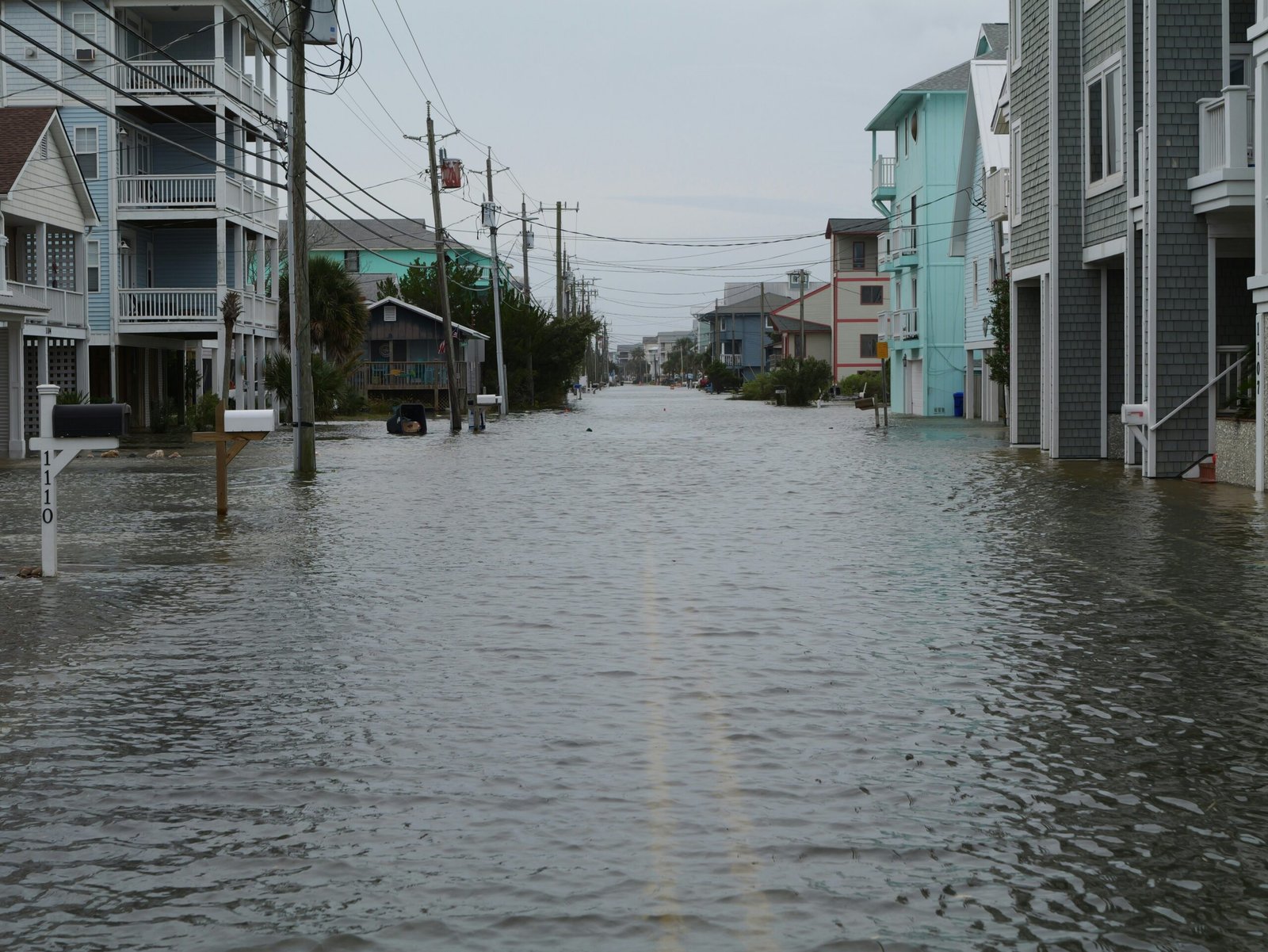
Now think about where your inventory, equipment, and electrical panels physically sit: on or near the floor. That’s the whole story of commercial flood risk in coastal Georgia. Six inches of water in the wrong building destroys the bottom shelf of everything — and here’s the fact that surprises business owners at the worst possible time: your commercial property insurance excludes flood entirely. Not storm surge, not a rain-swollen canal, not a king tide backing up the drains. Rising water needs its own policy, full stop. Here’s how to buy it right.
It isn’t just hurricanes, though the coast remembers Matthew and Irma well enough. Businesses here flood from three directions:
The takeaway: your FEMA flood zone determines your price and whether your lender requires coverage. It does not determine whether you flood.
Like the personal version, commercial flood coverage comes in two parts, purchasable together or separately:
The structure, foundation, electrical and plumbing systems, HVAC, water heaters, permanently installed fixtures and flooring. Through the National Flood Insurance Program (NFIP), commercial building coverage goes up to $500,000.
Inventory, equipment, machinery, furniture, computers. Also capped at $500,000 under the NFIP. For tenants who don't own their building, contents-only coverage is the play — and it's the one renters of commercial space skip most often and regret hardest.
Two structural notes that matter: NFIP coverage for basements and areas below the lowest elevated floor is sharply limited — a real consideration for older downtown buildings with below-grade storage — and NFIP commercial claims for buildings pay actual cash value in many cases rather than replacement cost, a less generous basis than most owners expect. Both are reasons the private market deserves a look.
Here’s the most important sentence on this page: NFIP flood policies do not cover business interruption. Your standard business income coverage won’t respond either, because the underlying cause — flood — is excluded there. So in the default setup, a flooded business gets help rebuilding the space and replacing the stock, and absolutely nothing for the three months of revenue lost while closed. For a seasonal business — a Tybee restaurant flooded in September, facing a dark October — the income gap can outweigh the property damage.
The fix lives in the private flood market, which has grown dramatically: private commercial flood policies can offer higher limits than the NFIP’s $500K caps, replacement cost valuation, shorter waiting periods, and — critically — business income and extra expense coverage for flood. For many local businesses the right structure is either a private policy replacing the NFIP entirely, or an NFIP base with excess flood layered above it for bigger buildings and inventories. Which wins depends on your building, elevation, and zone — this is precisely the comparison we run when we quote you both ways.

A commercial mortgage on a building in a high-risk zone (AE, VE, and kin) comes with a mandatory flood requirement. We match the policy to the lender's letter, first pass.
Downtown, on the islands, near the river. Inventory and kitchen equipment live at exactly the wrong altitude.
In Garden City and Port Wentworth, where the whole business model is goods stacked from the floor up. Ask us about how racking height and contents valuation interact — it changes the math.
The landlord's flood policy (if any) covers the building, not your contents or your income.
Lower risk means dramatically cheaper premiums — moderate- and low-risk zone policies are often the best value in the whole flood market. Cheap protection against an uninsured catastrophe is easy math.
With below-grade space, where the NFIP's basement limitations make private market comparison essential.

The honest answer: it ranges enormously, because the inputs do. A low-risk-zone office might see a modest four-figure premium or less; a high-value building near the water costs more, with elevation, foundation type, flood history, coverage limits, and deductibles setting the number. Three levers reliably move it: elevation documentation, mitigation measures carriers credit, and quoting NFIP against the private market — on commercial risks especially, the two can land far apart, and the private quote often wins on both price and coverage quality. That comparison is exactly what an independent agency is for.

We write commercial flood coverage across the greater Savannah area and the Georgia coast, including:
Savannah, Pooler, Garden City, Port Wentworth, Bloomingdale, Thunderbolt, Tybee Island, Vernonburg, Rincon, Springfield, Guyton, Richmond Hill, and Pembroke.
Riverfront and downtown storefronts, beach businesses on Tybee Island, warehouses and logistics operations along the port corridor in Garden City and Port Wentworth, marina businesses in Thunderbolt, and shops and offices from Pooler to Richmond Hill — if water can reach it, we can cover it.
Commercial flood is a structuring problem: NFIP or private or both, building and contents limits that reflect real values, the basement and below-grade fine print on older buildings, business income for flood that the NFIP will never sell you, excess layers over the $500K caps, and a policy that satisfies the lender’s exact language. We run the comparison both ways, read your flood zone determination and your loan requirements, tell you which mitigation steps the carriers actually credit, and put it all in place before the season — because we live on this coast too, and we know the calendar. When the water comes, the difference between businesses that reopen and businesses that don’t is mostly decided months earlier, on paper.
Not by state law — but federally regulated or insured lenders must require it for buildings in high-risk zones, and leases sometimes require tenants to carry contents flood. Beyond requirements, it’s simply the only protection against this coast’s most predictable catastrophe.
It takes just a few minutes, and there’s no obligation. Tell us about the property — location, elevation if you know it, what’s inside, and what your lender or lease requires — and we’ll quote NFIP against the private market and show you both, before the next storm has a name.
The water doesn’t check your coverage before it comes in. Check it now.