
The quick answer: No. Since FEMA rolled out Risk Rating 2.0 in October 2021, you no longer need an elevation certificate to buy flood insurance through the National Flood Insurance Program (NFIP). But for many Savannah homes, getting one can lower your premium—sometimes by a lot.
If you’re buying a home near the Savannah River, on Wilmington Island, or anywhere in Chatham County’s sprawling flood zones, someone has probably told you that you need an elevation certificate before you can get flood insurance. That used to be true. It isn’t anymore.
Let’s walk through what changed, what an elevation certificate actually does, and when spending the money on one makes sense for a Savannah homeowner.
First, What Is an Elevation Certificate?
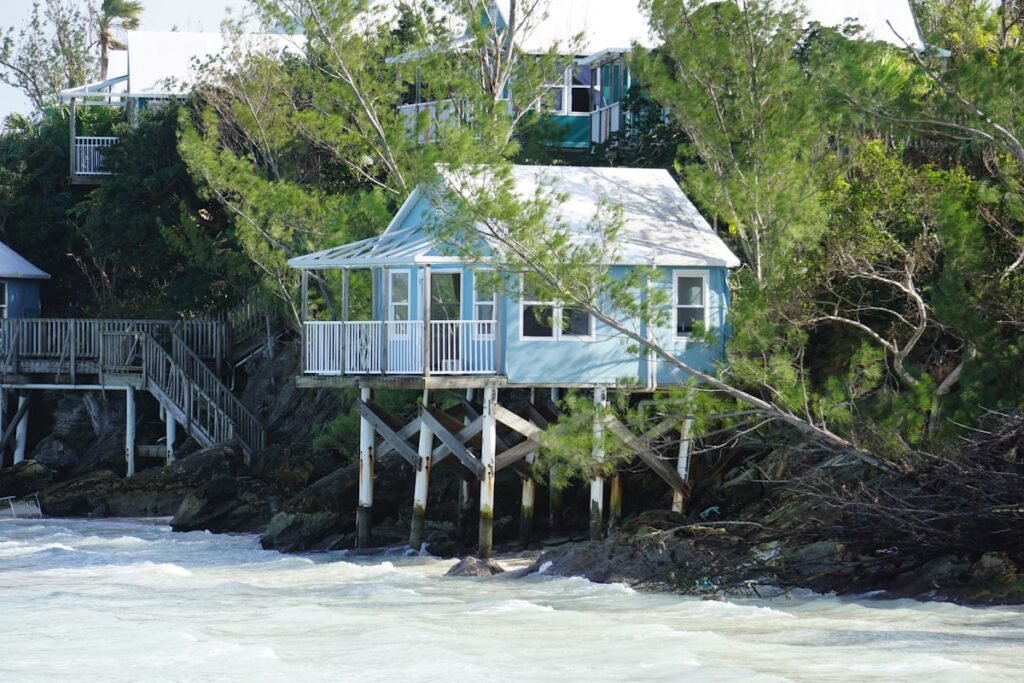
An elevation certificate is an official FEMA form completed by a licensed land surveyor, engineer, or architect. It documents exactly how high your home sits—specifically, the elevation of your lowest floor compared to the base flood elevation (BFE) for your area. The BFE is the height floodwater is expected to reach during a major flood, the kind with a 1% chance of happening in any given year.
Think of it as a measured, certified answer to one question: how high and dry is this house, really?
The certificate also records details that matter for flood risk, like whether you have a crawlspace, flood vents, or an enclosure below the living area. In Savannah, where so many older homes are raised on piers or brick foundations, those details can work strongly in your favor.
Why You No Longer Need One to Get Coverage
For decades, if your home sat in a high-risk flood zone—Zone AE or VE on the FEMA flood maps—an elevation certificate was essentially the price of admission for an accurately rated NFIP policy. Then FEMA overhauled how it prices flood insurance with a system called Risk Rating 2.0.
Under the new system, FEMA uses its own mapping and elevation data to estimate your home’s first-floor height, along with factors like distance to water, rebuild cost, and foundation type. Because FEMA generates that estimate itself, it no longer requires you to hand over a certificate to get a policy or a quote.
That’s genuinely good news. It means a homeowner in Georgetown or Pooler can get flood insurance this week without waiting on a surveyor or paying for a survey up front.
There’s a catch, though. FEMA’s estimate is exactly that—an estimate. And estimates can be wrong in your favor or against it.

When an Elevation Certificate Can Save You Money in Savannah
Here’s the part most homeowners miss: while a certificate is optional, submitting one can only help you. FEMA will use your certificate if it results in a lower premium—and if the numbers come back worse than its estimate, your rate stays where it is. The only real risk is the cost of the survey itself, which typically runs a few hundred to a couple thousand dollars depending on the property.
An elevation certificate tends to pay off in situations Savannah has plenty of:
- Raised historic homes. A Victorian district house sitting four feet up on brick piers may be rated as if its first floor were much lower. A certificate proves otherwise.
- Coastal and marsh-front properties. On Tybee Island, Isle of Hope, or along the tidal creeks, newer construction is often elevated well above the BFE. Documenting that clearance can shrink a painful premium.
- Homes near flood zone boundaries. If your lot straddles the line between Zone AE and Zone X, precise elevation data matters more than a map’s broad strokes.
- Unusual lots. Sloped ground, fill dirt, or a home built noticeably higher than the neighbors are all things FEMA’s generalized data can miss.
One practical example: say FEMA’s model assumes your first floor sits one foot above grade, but a surveyor certifies it’s actually three feet up. Those extra two feet of clearance translate directly into lower risk—and a lower flood insurance cost, year after year, for as long as you own the home.
A Few Other Times a Certificate Comes in Handy
Beyond premium savings, there are three situations where Savannah homeowners still reach for an elevation certificate:
- Private flood insurance. Some private carriers—an increasingly popular option in coastal Georgia—ask for elevation data to rate a policy accurately or to offer their best pricing.
- Removing a lender requirement. If you believe your home was mapped into a high-risk zone by mistake, a certificate supports a Letter of Map Amendment (LOMA). If FEMA agrees your structure sits above the flood zone, your lender can no longer require flood insurance.
- Building or renovating. Chatham County and the City of Savannah use elevation certificates to confirm new construction and major improvements in flood zones meet local floodplain rules.
How to Get an Elevation Certificate (You Might Already Have One)
Before you pay for a new survey, check whether one already exists. Start here:
- Your closing documents. Sellers of homes in flood zones often have a certificate from their own purchase or refinance.
- The local floodplain manager. The City of Savannah and Chatham County keep elevation certificates on file for many properties, especially newer construction. A phone call can save you the full cost of a survey.
- Your builder or previous surveyor. If the home was built after the community joined the NFIP, a certificate was likely completed at some point.
No luck? Hire a Georgia-licensed land surveyor to complete the FEMA form. Certificates don’t expire as long as nothing structural changes, so it’s a one-time expense that can keep working for you every renewal.
The Bottom Line for Savannah Homeowners
You do not need an elevation certificate to get flood insurance in Savannah, GA. You can get a quote today, with or without one. But given how much of Chatham County sits in or near a FEMA flood zone—and given that a standard homeowners policy covers exactly zero flood damage—the smarter question is whether a certificate could shrink your premium.
For a lot of raised, coastal, and historic Savannah homes, the answer is yes. The easiest way to find out is to get a quote first, see where your rate lands, and then decide with your agent whether a survey is worth the investment.
See What Flood Insurance Costs for Your Savannah Home
Get a fast, no-pressure flood insurance quote from a local independent agency that knows Chatham County’s flood zones—no elevation certificate required.Get My Flood Insurance Quote