
No. Not storm surge, not rising water from heavy rain, not tidal flooding. Your homeowners policy excludes all of it.
That part’s simple. What trips people up is everything around the edges — because water damage doesn’t sort into two neat buckets. It sorts into three, and the third one is a gap that neither policy fills unless you’ve specifically bought your way into it.
Here’s how the line actually gets drawn in Savannah.
The definition that decides everything
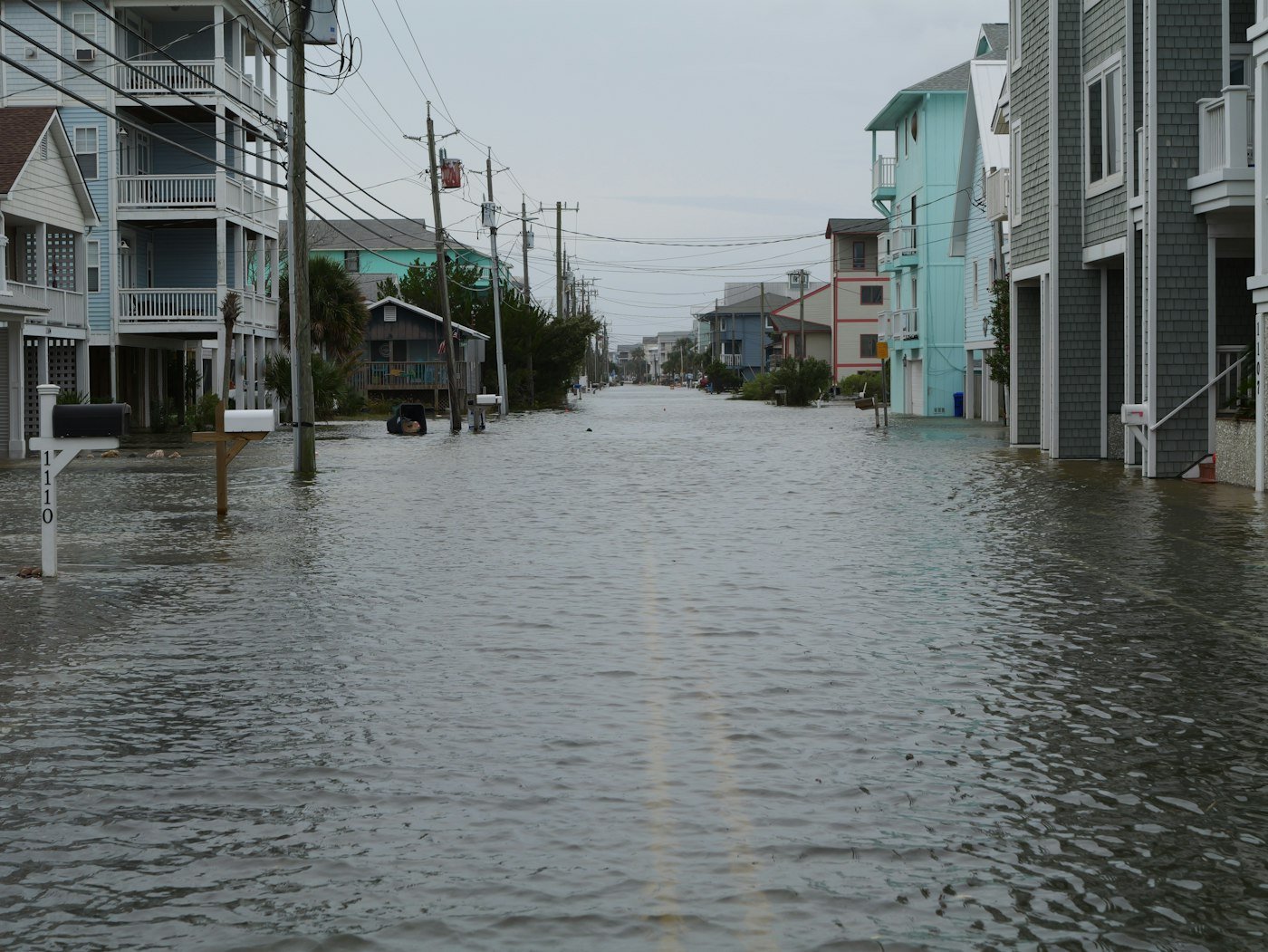
Policies don’t use “flood” loosely. The standard definition is water that inundates two or more acres of normally dry land, or two or more properties, from:
- Overflow of inland or tidal waters
- Unusual and rapid accumulation of runoff or surface water
- Mudflow
That word tidal is doing heavy lifting here. Storm surge coming off the Savannah River or pushing up through the marsh is textbook flood. So is the four inches of rain that has nowhere to drain and ends up in your living room.
If it’s on that list, your homeowners policy doesn’t pay. Full stop.
The one rain scenario your policy does cover
There’s a real exception, and it matters during hurricane season.
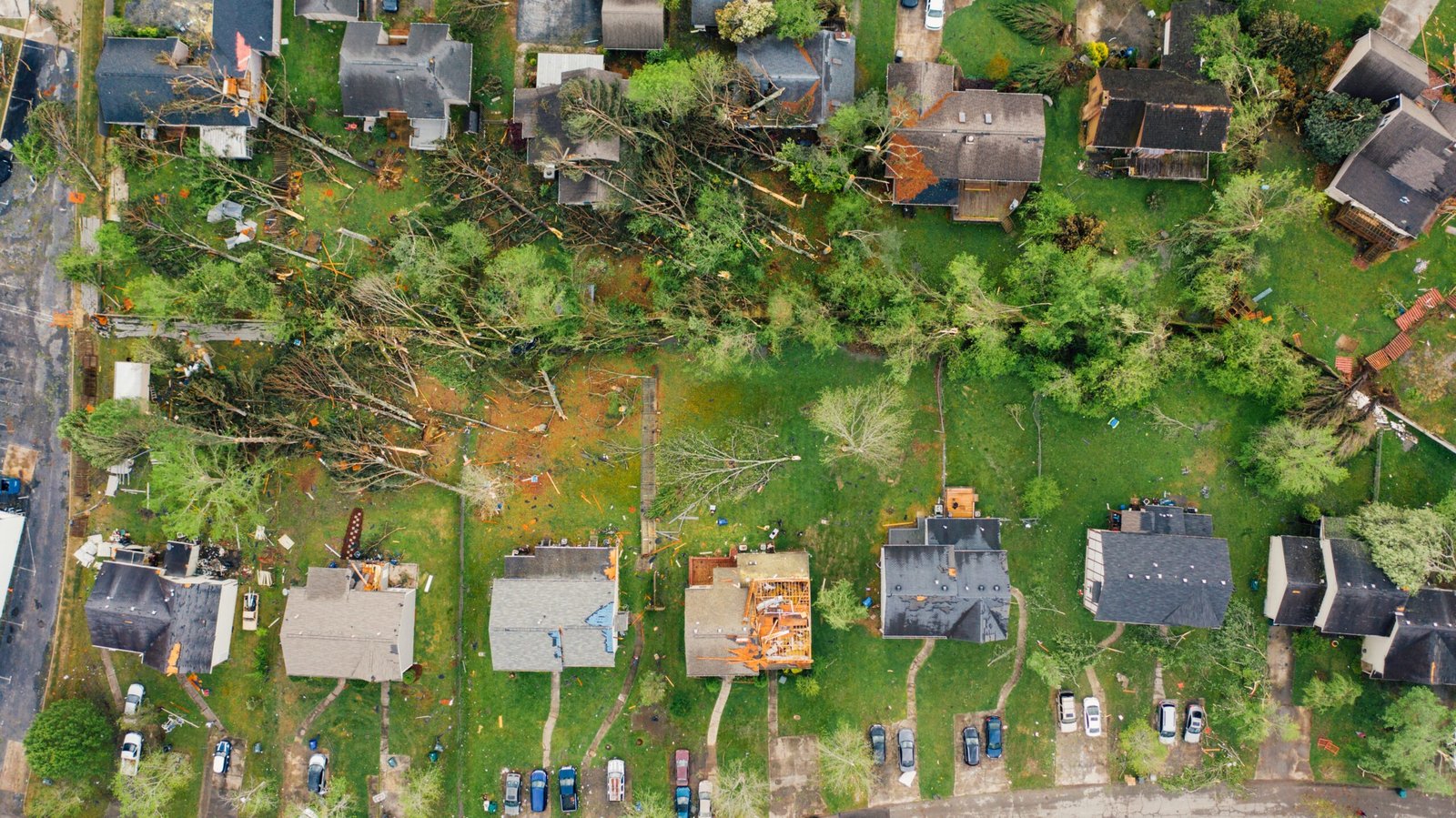
If wind opens your house up, the rain that follows is covered. A tree limb punches through the roof, shingles peel off, a window blows in — that’s a wind loss, and the water that comes through the hole is part of it.
Rain through an intact window or door usually isn’t. No opening created by a covered peril, no claim.
So during the same storm, on the same house: rain pouring through the hole where your roof used to be is a homeowners claim. Water coming under the front door is not.
And here’s the mirror image — NFIP doesn’t cover wind-driven rain either. If wind blows rain in through a damaged wall, that’s not a flood loss. Each policy is pointing at the other. This is exactly why you want both, and why documenting how water got in matters enormously.

The third bucket nobody warns you about
Sewer backup and sump pump failure.
Heavy rain overwhelms the municipal sewer main. Pressure reverses. Sewage comes up through your floor drains.
Your homeowners policy excludes it. NFIP excludes it too — flood policies cover surface flooding, not sewer surcharge.
It falls in the gap between two policies, and the fix is a water backup endorsement added to your homeowners policy. It typically runs $50 to $150 a year. A sewer cleanup routinely runs five figures.
One important limit: that endorsement doesn’t cover water entering a drain because of an external flood. That’s still a flood event, and it belongs to NFIP.
Which produces this genuinely strange result — and it’s worth knowing before you’re arguing with an adjuster:
- Sump pump backs up during a flood in your area → NFIP may cover it
- Sump pump burns out on an ordinary rainy Tuesday → NFIP won’t; the endorsement will
- Flood causes water to seep into a lower level → NFIP may cover it
- Water slowly permeates through walls from rising groundwater → neither one

Same hurricane, four different claims
Picture one storm hitting a house on Wilmington Island. Four things happen:
- Wind strips the roof. Homeowners policy — subject to your named storm deductible.
- Rain pours through the opening and ruins the ceiling. Homeowners policy, same claim.
- Two feet of surge comes through the ground floor. Flood policy. Nothing else touches it.
- The sewer backs up into the utility room. Neither — unless you bought the endorsement.
Four losses. Three different answers. One storm.
Worth knowing too: many policies carry anti-concurrent causation language, meaning that when a covered peril and an excluded peril combine to cause the same damage, the carrier can deny the whole loss. Which is why “wind or water?” becomes such a fight after a hurricane, and why photographs taken as things happen are worth more than any argument made later.
What flood insurance actually covers
Through the NFIP, building coverage caps at $250,000 and contents at $100,000. Contents is a separate purchase — a lot of Savannah homeowners carry building coverage only and don’t realize their furniture isn’t included.
If your home is worth meaningfully more than $250,000 to rebuild, look at private flood or excess flood. Private markets write limits well beyond the NFIP cap.
Two more things worth planning around:
The 30-day waiting period. Most new NFIP policies don’t take effect for a month. You cannot buy this with a storm in the Gulf.
You don’t have to be in a high-risk zone. Roughly a quarter of NFIP claims come from properties outside mapped high-risk areas, and coverage in Zone X is usually much cheaper. Chatham County has flooded more than 14 times since 1948 from storms dropping four inches or more, with over 1,400 dwellings on record as flooded. Rain doesn’t check your zone letter.
Three questions for your agent
- “Do I have a water backup endorsement?” If not, add it. It’s the cheapest gap-closer in your whole policy.
- “Does my flood policy include contents?” Building-only is more common than people think.
- “Is my flood limit enough to rebuild?” If your replacement cost is above $250,000, the NFIP cap leaves a hole.
And if you don’t have flood insurance at all, price it before you decide against it. In Zone X it’s often a few hundred dollars a year — less than most people spend on a streaming bundle, against the one loss most likely to actually happen here.
The short version
Wind is yours. Rising water isn’t. Sewer backup belongs to neither until you buy the endorsement.
Every Savannah home should be carrying all three, because the storm that eventually comes through won’t respect the paperwork.
Want us to check which of the three you’re actually carrying? Send over your declarations page and we’ll map it out.
Policy language, endorsements, and limits vary by carrier. Figures are illustrative, not quotes.