
Yes, you need rideshare insurance if you drive for Uber or Lyft, because platform coverage only applies during specific app periods and most personal auto policies exclude driving for hire entirely. When your app is off, your personal policy pays. Once you’re logged in or on a trip, the platform’s commercial coverage takes over, but only up to certain limits and only if your own policy has the right coverages behind it. Tell your insurer you drive for a rideshare platform, add an endorsement or appropriate policy, and if you’re ever in a wreck, report it to the platform and call your agent immediately.
TL;DR:
- Drivers should obtain a rideshare endorsement or a commercial auto policy to ensure coverage during the app-on, waiting, and trip periods, as personal policies often exclude this use.
- Most liability coverage from platforms like Uber and Lyft provides at least one million dollars during en route and on-trip periods but limits during waiting periods, which can cause gaps.
- Without full coverage, drivers risk having their personal auto policy deny claims due to exclusion clauses if they do not carry collision and comprehensive coverages personally.
- Disclosing rideshare activity to your insurer and securing written confirmation of coverage safeguards against claim denials or cancellations.
- Driving without proper rideshare coverage, especially during periods of waiting, exposes drivers to significant financial risks even if platform policies are in place.
Table of Contents
- How Rideshare Coverage Works: The Three Coverage Periods Explained
- What Rideshare Platforms’ Commercial Insurance Typically Covers
- Coverage Gaps: How Personal Policies Fall Short
- Do You Need to Tell Your Insurer? Disclosure and Shopping for Coverage
- What to Do After an Accident While Driving for Uber or Lyft
- Rideshare Insurance Costs: What Drives the Price Up
- State Rules and Exceptions Drivers Should Watch
- How Daly & Alexander Insurance Helps Rideshare Drivers in the U.S.
- Why the Standard Rideshare Insurance Advice Falls Short
- Get Your Rideshare Coverage Reviewed
- Sources
- FAQ
How Rideshare Coverage Works: The Three Coverage Periods Explained
Every rideshare trip falls into one of three insurance periods, and knowing which one you’re in determines whose policy actually pays.
Period 1: App off. You’re driving your own car for personal errands, nothing platform-related is running. Your personal auto policy is fully responsible here, exactly as if you never signed up to drive for anyone.
Period 2: App on, waiting for a ride request. You’ve logged in and you’re available, but no passenger has been matched yet. This is where most drivers get caught off guard, because their personal insurer often won’t cover a claim during this window, and platform liability coverage during this period is typically lower than what applies once a trip is underway.
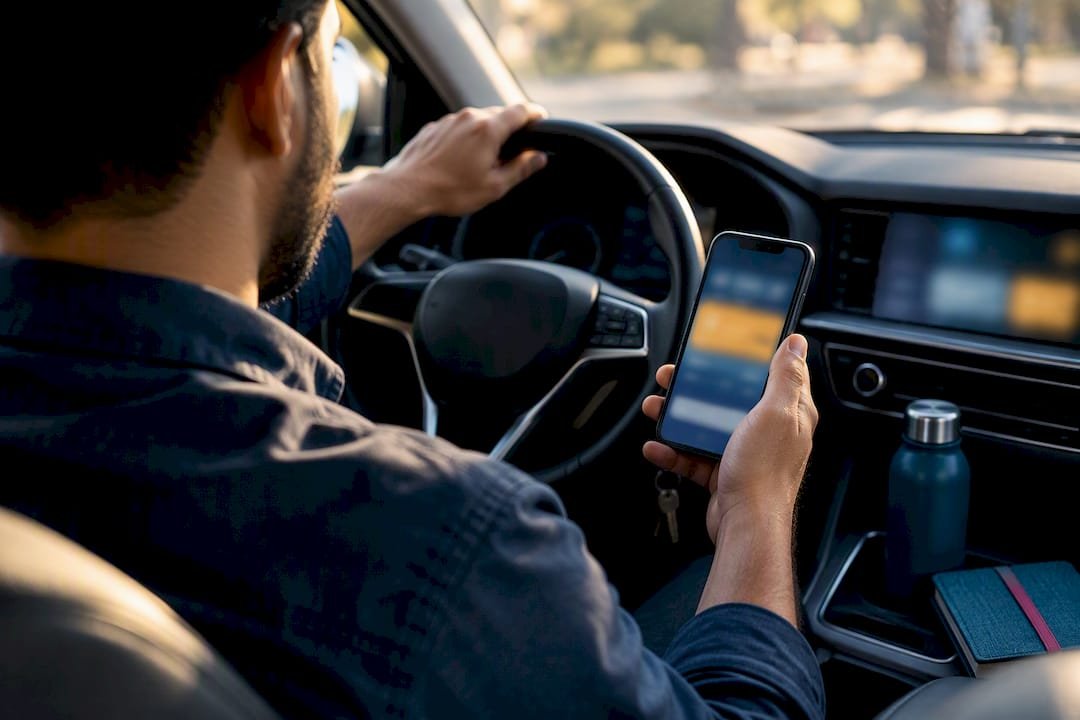
Period 3: En route to pick up or on-trip. From the moment you accept a ride until the passenger is dropped off, the rideshare company’s commercial policy is primary, generally with much higher liability limits.
Here’s how that plays out in practice:
- Scenario A: You’re parked at a gas station with the app off, checking your phone, when someone backs into your bumper. That’s a personal auto claim, full stop.
- Scenario B: You’re logged into Uber, waiting for a ping at a red light, and get rear-ended. Uber’s contingent coverage may apply for liability, but you’ll likely need your own collision and comprehensive coverage to fix your car, since the platform coverage during this waiting period is limited and often contingent on your personal policy responding first.
- Scenario C: You’ve picked up a Lyft passenger and get into a collision two blocks from the drop off. Lyft’s commercial liability policy is primary here, and its contingent comprehensive and collision coverage can kick in for damage to your own vehicle, again often requiring that you already carry those coverages personally.
That last detail trips up a lot of drivers. Contingent collision and comprehensive from the platform generally only activates if your personal auto policy already includes those coverages. Drop collision to save a few dollars a month, and you may have nothing backing you up even during Period 3.
What Rideshare Platforms’ Commercial Insurance Typically Covers
Uber and Lyft both maintain commercial policies that flex based on which of the three periods you’re in, and the limits differ enough that you should know them before your next shift.
During the waiting period, coverage tends to be thinner. Lyft has documented minimums in that window in some markets, while liability jumps dramatically once a trip is accepted. During the en route and on-trip periods, Lyft generally procures at least $1,000,000 in third-party liability coverage in most markets, with state-by-state exceptions for livery-regulated cities and TLC drivers. Uber follows a similar structure.
Typical coverage snapshot (en route/on-trip period): Uber and Lyft both commonly provide up to $1,000,000 in third-party liability coverage once a ride is accepted, plus contingent comprehensive and collision coverage (subject to a deductible, often around $2,500) when the driver carries those coverages personally, according to Uber’s own coverage disclosures.
Beyond liability, platforms often layer in:
- Uninsured and underinsured motorist coverage for when the other driver has no insurance or not enough.
- Personal injury protection or medical payments coverage in states that require it.
- Occupational accident coverage in select states, which functions more like workplace injury protection than standard auto coverage.
These figures vary by state and change over time, so the only reliable way to confirm what applies to you is pulling the actual Certificate of Insurance for your state directly from the platform’s insurance page.
Coverage Gaps: How Personal Policies Fall Short
Most personal auto policies contain a clause excluding use of the vehicle as a “public livery” or “conveyance for hire.” That single clause is why so many drivers discover, only after filing a claim, that their insurer denied it. State regulators define this broadly enough that simply being logged into the Uber or Lyft app, even before accepting a ride, can trigger the exclusion, according to guidance from the North Carolina Department of Insurance.
Three practical fixes exist, and which one fits depends on how you drive:
- Rideshare endorsement. A relatively inexpensive add on to your existing personal policy that closes the Period 2 gap. This works well for part-time drivers doing a shift or two a week.
- Standalone rideshare policy. A separate policy built specifically for TNC driving, useful if your current insurer doesn’t offer an endorsement or you drive enough hours that you want dedicated coverage.
- Commercial auto policy. Necessary for drivers who log heavy weekly hours, drive for multiple platforms, or operate in a market requiring commercial registration such as certain livery-regulated cities. A commercial auto policy also tends to make more sense once your vehicle is doing double duty for other paid work.
Pro Tip: If you want the platform’s contingent collision and comprehensive coverage to actually pay out during Period 3, your personal policy needs to carry those same coverages first. Liability-only personal policies leave that contingent protection with nothing to attach to.
Do You Need to Tell Your Insurer? Disclosure and Shopping for Coverage
Yes. Not disclosing rideshare driving to your insurer is one of the fastest ways to lose coverage exactly when you need it. State insurance departments, including North Carolina’s, warn that failing to disclose rideshare activity can lead to a denied claim or an outright policy cancellation once the insurer discovers the undisclosed exposure, often after a claim has already been filed.
Here’s how to handle the conversation and shop smart:
- Call your current insurer first and ask directly whether they offer a rideshare endorsement, and whether adding one changes your deductible or premium.
- Ask what happens during Period 2 specifically. Some insurers only patch the waiting-period gap; others leave it open even with an endorsement.
- Get written confirmation. Email or policy documentation showing the endorsement was added and the effective date protects you if a dispute arises later.
- Shop at least two other carriers if your current insurer won’t offer rideshare coverage, since not every company writes it in every state.
- Keep a copy of your Certificate of Insurance from Uber or Lyft alongside your personal policy documents, so you can compare limits side by side.
What to Do After an Accident While Driving for Uber or Lyft
The sequence you follow in the minutes after a crash affects how smoothly both the platform’s claim and your personal claim get resolved.
- Check for injuries and call 911 if anyone is hurt or if the crash involves significant damage. Safety comes before paperwork every time.
- Move to safety if the vehicle is drivable and it’s safe to do so, then turn on hazards.
- Photograph everything, including vehicle damage from multiple angles, the accident scene, license plates, and road conditions.
- Screenshot your app status immediately, showing whether you were offline, waiting, or on a trip when the collision happened. This single detail determines which insurance period applies.
- Collect witness information and the other driver’s insurance details, license plate, and contact information.
- Report the accident inside the app right away, since Uber and Lyft both require prompt reporting activating their commercial coverage.
- Call your personal insurance agent the same day, even if you believe the platform’s policy will cover the damage, so your file reflects the incident and disclosure stays current.
- Ask about subrogation if the platform’s insurer pays out and later seeks reimbursement from the at fault driver’s insurer, which can affect how quickly your vehicle gets repaired. Your agent can help you file the claim correctly and track how the two policies interact.
Rideshare Insurance Costs: What Drives the Price Up
Expect a moderate premium increase, not a dramatic one, for most part-time drivers who add a rideshare endorsement rather than a full commercial policy.
Several factors move the number:
- Your driving record and claims history over the past three to five years.
- The vehicle you drive, since newer or more expensive cars cost more to insure across every coverage type.
- How many hours per week you actually drive for a platform, since insurers price exposure based on time on the road.
- Which state you’re in, since rideshare insurance regulations and available products vary significantly by market.
- The coverages you currently carry, since adding collision and comprehensive alongside an endorsement costs more than liability alone.
An endorsement is almost always cheaper than a standalone rideshare policy or full commercial auto coverage, though exact savings depend on your state and carrier.
Pro Tip: Ask about a defensive driving discount before you add your endorsement. Many carriers apply it automatically to the whole policy, not just the rideshare portion, and it can offset part of the increase. Bundling your auto policy with a personal umbrella policy is also worth considering if you’re carrying passengers regularly, since it adds liability protection beyond your primary limits at a relatively low added cost.
State Rules and Exceptions Drivers Should Watch
Rideshare insurance regulations aren’t uniform across the country, and a few categories of exceptions catch drivers off guard.
- TLC and livery-regulated markets. Cities and states with taxi and limousine commission oversight, most notably New York City, often require drivers to carry commercial insurance regardless of what the platform provides, and platform coverage may not apply the way it does elsewhere.
- Occupational accident programs. Some states offer occupational accident coverage as an alternative to traditional workers’ compensation for injured drivers, a distinction platforms have referenced for markets including California, Massachusetts, and Washington. This protects you if you’re hurt on a trip, but it isn’t a substitute for auto liability or collision coverage.
- State-by-state liability minimums. The exact dollar amounts platforms provide during each coverage period shift depending on state minimum requirements, so a driver in one state may have different contingent limits than a driver two states over.
The only reliable way to confirm your state’s exact rules is pulling your state’s Certificate of Insurance directly from the platform and cross-checking it against your state Department of Insurance guidance, since third-party guides and forum posts go stale fast when regulations change.
How Daly & Alexander Insurance Helps Rideshare Drivers in the U.S.
A rideshare endorsement isn’t a one-size product, and the right fit depends on how many hours you drive, what you already carry, and which carriers even offer it in your state. That’s where a local independent agency earns its keep. Daly & Alexander reviews your existing auto policy, checks it against Uber’s or Lyft’s coverage periods, and shops multiple carriers for an endorsement or commercial option that actually closes your Period 2 gap.
Bring your current policy and your rideshare Certificate of Insurance to a coverage review appointment. Expect a straightforward conversation: how many hours you drive weekly, whether you drive for one platform or several, and whether an umbrella policy makes sense given how often you’re carrying passengers. If you ever need to file a claim, that same agent relationship means someone who already knows your coverage picture is advocating for you, not a call center reading from a script.
Why the Standard Rideshare Insurance Advice Falls Short
Most articles on this topic stop at “get an endorsement” and call it solved. That’s incomplete, and it leaves drivers exposed in the exact scenario where they need coverage most: Period 2, sitting at a light with the app on, waiting for a ping.
The bigger issue is that drivers treat disclosure as optional paperwork rather than the thing that actually determines whether a claim gets paid. An endorsement without disclosure is close to worthless, because the insurer can still challenge the claim if the application never mentioned rideshare driving in the first place. Get the disclosure conversation right, in writing, before you worry about which endorsement product to buy.
If you drive more than a few shifts a week, don’t default to the cheapest endorsement just because it’s the popular answer online. Compare it honestly against a standalone rideshare policy or commercial auto coverage, because the math changes fast once you’re logging real hours. The right move is often a fifteen-minute conversation with an agent who can look at your actual driving pattern, not a generic online calculator.
— Nathan
Get Your Rideshare Coverage Reviewed
Endorsements bought online through a comparison site often leave Period 2 gaps unresolved, because those platforms sell what’s easiest to quote, not what actually fits how you drive. A local agent can review your existing policy against your actual weekly driving pattern and shop multiple carriers to find a rideshare endorsement, standalone policy, or commercial option that genuinely closes the gap.
That review covers more than the endorsement itself. If you’re carrying passengers regularly, your agent can quote a personal umbrella policy alongside your auto coverage for extra liability protection, and if you ever need to file a claim, you’ll have a named agent advocating for you rather than a call queue. Start by requesting a free coverage review through Daly & Alexander’s auto insurance page, bring your current policy and your rideshare Certificate of Insurance, and get a straight answer on whether your coverage actually protects you during every period you drive.
This article is general information, not a substitute for advice from a qualified financial advisor. Consult a qualified financial professional about your own circumstances before acting on anything here.
Sources
- Driving for a Transportation Network or Delivery Network Company | NC DOI
- Insurance for Rideshare and Delivery Drivers | Uber
- Insurance resources for Lyft drivers
- NAIC consumer guidance: sharing economy
FAQ
Can I buy just rideshare insurance without a personal auto policy?
No. Rideshare endorsements and standalone rideshare policies are designed to supplement an existing personal auto policy, not replace it, since platform coverage during the waiting period assumes you already have collision and comprehensive protection in place. You’ll need a personal auto policy first, then add the rideshare coverage on top.
What insurance is best for rideshare drivers?
For most part-time drivers, a rideshare endorsement added to an existing personal auto policy is the most cost-effective option, since it’s typically cheaper than a standalone policy or full commercial coverage. Drivers logging heavy weekly hours or driving in TLC-regulated markets often need a standalone rideshare policy or commercial auto policy instead. A local agent can review your driving pattern and match you to the right product.
How much more expensive is rideshare insurance?
Adding a rideshare endorsement typically results in a moderate premium increase rather than a dramatic one, though the exact amount depends on your state, carrier, driving record, and how many coverages you already carry. Standalone rideshare policies and commercial auto coverage generally cost more than an endorsement because they provide broader protection.
Can I drive for Uber without rideshare insurance?
You can technically log into the app without an endorsement, but you’re taking on real financial risk, since your personal insurer can deny claims that occur while you’re logged in and waiting for a ride, per state guidance. Uber and Lyft’s own commercial coverage fills part of that gap once you’re on a trip, but the waiting period remains a real exposure without proper coverage in place.