
A standard homeowners policy covers your dwelling, detached structures, personal belongings, liability, medical payments and extra living costs if you can’t stay home. Flood and earthquake damage are usually excluded and need separate coverage. Two follow-ups matter right away: whether your dwelling is insured at replacement cost, and that flood policies typically carry a 30-day waiting period.
TL;DR:
- Keep dwelling coverage tied to rebuilding cost, not market value; insurers commonly require at least 80% of replacement cost, and estimates need refreshing every other year.
- NFIP flood policies cap building coverage at $250,000 and contents at $100,000; homeowners in areas with lower flood risk may qualify for Preferred Risk Policies.
- A higher deductible lowers premiums, but wind or hurricane deductibles may be percentages of dwelling limits; choose an amount you can cover from savings.
- Tell your agent before running a home business or renting space, because standard policies may limit business equipment and exclude related liability.
Table of Contents
- What do Coverage A through Coverage F actually pay for?
- Which major risks does a standard policy leave out?
- Which endorsements and add-ons are worth considering?
- How do valuation, limits and deductibles change your payout?
- How do you read your declarations page?
- Why does working with an agent make a difference?
- Do home security and safety features lower your premium?
- What is the difference between named perils and open perils coverage?
- What happens after you file a home insurance claim?
- Does home insurance cover liability from a home business or a rental?
- Editorial take: why the declarations page deserves more of your attention than the price
- Get a coverage review with a licensed agent
- FAQ
- Sources
What do Coverage A through Coverage F actually pay for?
Most policies follow the same lettered structure, which the NAIC homeowners guidance summarizes: dwelling, other structures, personal property, loss of use, personal liability and medical payments. Mapping a loss to the right letter is the first step in any claim. Our own homeowners coverage guide goes deeper on policy forms if you want the long version.
- Coverage A, dwelling: pays to repair or rebuild the house and attached structures such as an attached garage. Replacement cost pays what it takes to rebuild with similar materials today. Market value is what a buyer would pay, and it includes land and location, so it is a poor guide for rebuilding.
- Coverage B, other structures: fences, sheds and detached garages. The limit is usually set as a percentage of your Coverage A amount, so a higher dwelling limit lifts this one too.
- Coverage C, personal property: furniture, clothing, electronics and appliances you own. Limits are commonly a percentage of the dwelling limit, often in the 50–70% range. Many policies extend some protection to belongings away from home, such as in a storage unit or a hotel room. A written inventory makes this coverage far easier to use.
- Coverage D, loss of use: also called additional living expenses. If a covered loss makes your home unlivable, it helps with hotel bills, extra food costs and temporary rent. Limits are typically a percentage of the dwelling limit or capped by time.
- Coverage E, personal liability: pays when you are legally responsible for injuring someone or damaging their property. A guest who trips on loose porch boards is a classic example.
- Coverage F, medical payments: pays small medical bills for guests hurt at your home, regardless of fault. Limits are usually modest compared with liability limits.
Lenders usually require proof of coverage, and the Consumer Financial Protection Bureau notes that homeowner’s insurance is separate from mortgage insurance. That distinction trips up many first-time buyers.
Which major risks does a standard policy leave out?
Some of the costliest losses sit outside the base policy. Standard homeowners policies almost universally exclude flood and earthquake damage, so you need a separate policy or endorsement for each. Many homeowners assume otherwise, which is why FEMA publishes a rumor page correcting the belief that homeowners insurance includes flood.
Beyond those two, expect these gaps:
- Sewer and water backup: commonly excluded, but available as an endorsement. We explain how it works in our water and sewer backup coverage page.
- Wear and tear and maintenance: a roof that fails from age or a pipe that corrodes from neglect is generally your cost, not the insurer’s.
- Intentional acts: damage you cause on purpose is never covered.
- Mold: often limited or excluded unless it follows a covered loss, with add-on options in some policies.
For flood, the NFIP is the usual route. FEMA’s flood insurance fact sheet explains that NFIP policies are sold in participating communities and that Preferred Risk Policies exist for lower-risk areas. Our flood insurance guide covers NFIP and private options.
NFIP policies offer building coverage up to $250,000 and contents coverage up to $100,000, with a typical 30-day waiting period before coverage starts. That waiting period means buying flood coverage when a storm is already in the forecast is too late.
Which endorsements and add-ons are worth considering?
Endorsements change the base policy to fit what you own. These are the ones homeowners buy most often:
- Scheduled personal property: jewelry, fine art and collectibles are usually subject to low sublimits in the base policy. Scheduling an item lists it individually with its own value, which removes that blanket cap. Our page on personal articles coverage shows how this works.
- Extended or guaranteed replacement cost: adds a cushion above your dwelling limit when rebuilding costs surge after a widespread loss.
- Ordinance or law: pays for code upgrades required when you rebuild, such as updated wiring or wind-resistant features. Without it, your policy may pay to restore the old standard and leave you with the upgrade bill.
- Sewer and water backup, service line and equipment breakdown: cover backups, damaged underground utility lines and failed home systems.
- Personal umbrella: raises liability limits well above what Coverage E provides, sitting on top of your home and auto liability.
Pro Tip: Ask your agent which of these your lender or your neighborhood’s risks make most relevant, rather than buying all of them at once.
How do valuation, limits and deductibles change your payout?
The same loss can produce very different checks depending on how your policy values it.
- Replacement cost pays to replace damaged property with new items, without subtracting depreciation. Actual cash value subtracts depreciation, so a ten-year-old roof or couch pays out far less than a new one would cost.
- Dwelling limits should track rebuilding cost, not purchase price. Industry summaries note that insurers commonly require insuring at least 80% of replacement cost, and falling below that threshold can reduce what a partial loss pays.
- Deductibles are what you pay before coverage kicks in. A higher deductible lowers your premium but raises your out-of-pocket cost on a claim, so it makes sense only if you could comfortably cover it from savings.
- Special deductibles for wind or hurricane losses often apply in coastal areas and are usually a percentage of the dwelling limit rather than a flat amount.
- Estimates need refreshing. A home’s market value is not the same as its replacement cost, and professionals recommend a replacement-cost estimate at least every other year to avoid underinsurance.
How do you read your declarations page?
The declarations page is the one-page summary at the front of your policy, and it is where mistakes show up first. A sample declarations page lists coverages and limits, deductibles, endorsements, premium and mortgagee details. We walk through each section in our guide to understanding your homeowners policy.
Check these items in order:
- Confirm the policy period and the named insureds.
- Match each coverage limit to what you would need after a total loss.
- Look for the deductible, including any separate wind or hurricane deductible.
- Read the endorsement list to verify what you added is actually there.
- Confirm your mortgagee’s name and address.
Then bring these questions to your agent:
- Is my dwelling insured to replacement cost?
- Do I need any items scheduled?
- Would you recommend sewer backup or an umbrella for my home?
- How long would additional living expenses pay for my family?
Keep a room-by-room inventory with receipts and photos, and update it when you buy something significant.
Why does working with an agent make a difference?
Our agents have extensive experience with homeowners and flood policies, and we help clients build replacement-cost estimates and choose endorsements that fit their homes. We can also help you access the NFIP, add excess flood layers, and look at state FAIR plan options when private coverage is hard to find. Insurers’ underwriting has grown more complex as climate-related risks rise, which is why reviewing your coverage with an agent every so often is smart.
Do home security and safety features lower your premium?
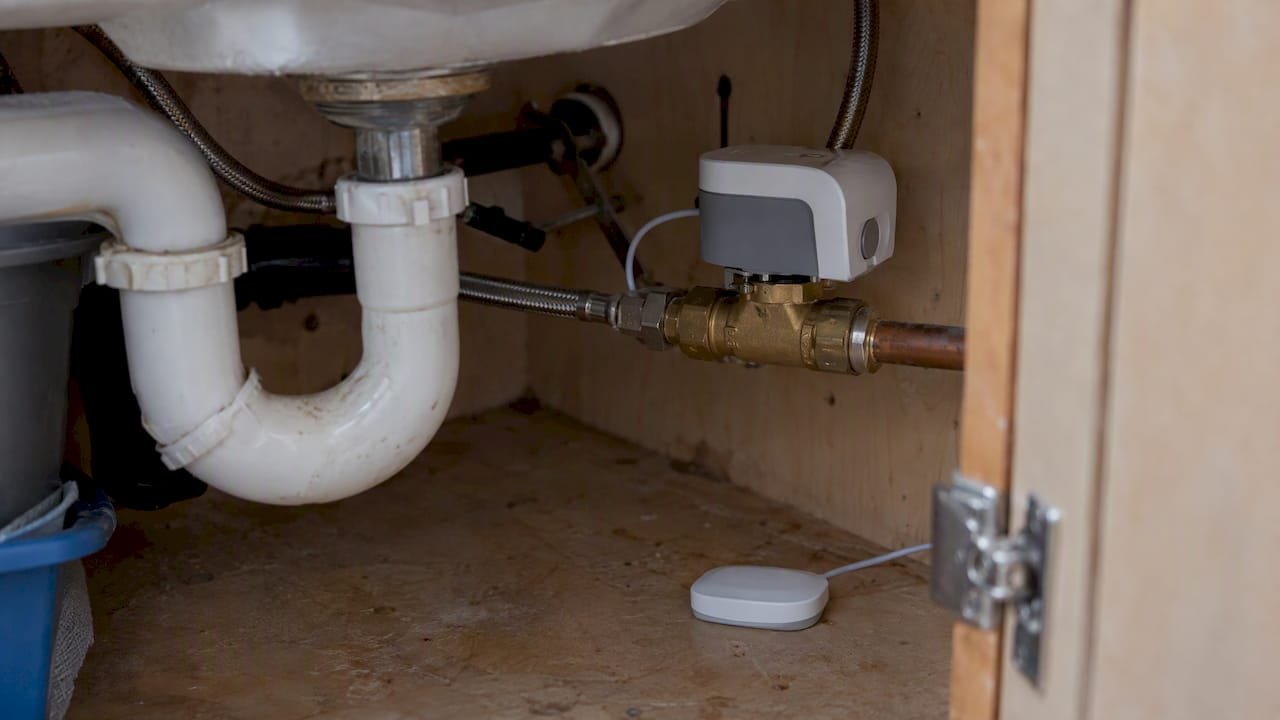
Often, yes, though the size of the discount varies by insurer and state. Features that reduce the chance or severity of a loss are what underwriters reward: monitored burglar and fire alarms, smoke detectors, deadbolts, sprinkler systems, water leak sensors with automatic shutoff valves, and storm protection such as impact-rated windows or reinforced roof attachments.
The discount depends on how the feature is installed and monitored. A central-station alarm that notifies a monitoring company typically earns more credit than a stand-alone siren. Some insurers ask for proof, such as an installation certificate or monitoring contract, so keep those documents with your policy file.
Safety upgrades also help beyond the premium. A water shutoff valve can stop a burst pipe from becoming a five-figure claim, and a newer roof or updated electrical panel can make your home easier to insure in the first place. If your home is older, ask your agent which upgrades the carrier credits and in what amount, because the answer differs from one company to the next.
Discounts are one reason bundling matters, too. Pairing your home policy with auto or umbrella coverage with the same carrier often lowers the combined cost, so ask about multi-policy discounts when you review your limits.
What is the difference between named perils and open perils coverage?
These terms describe how your policy decides what it covers, and the distinction decides whether a strange loss gets paid.
Named perils coverage pays only for causes of loss the policy lists by name, such as fire, lightning, windstorm, hail, theft and vandalism. If the cause of your loss is not on the list, it is not covered. The burden is on you to show your loss came from a listed peril.
Open perils, also called all-risk, flips that logic. The policy covers any cause of loss unless it is specifically excluded. Exclusions typically include flood, earthquake, wear and tear, neglect and intentional damage. Here the insurer must point to an exclusion to deny a claim.
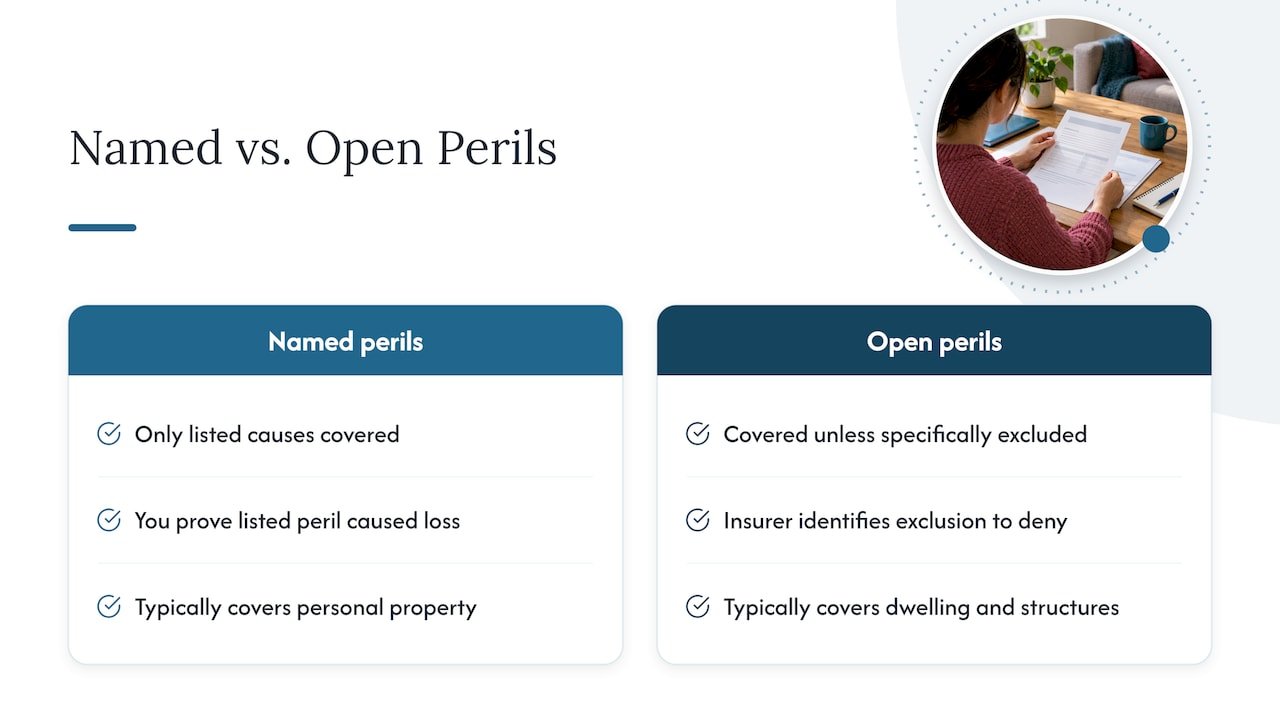
Many standard policies combine the two: open perils for the dwelling and other structures, and named perils for personal property. Upgraded forms extend open perils to belongings as well, which matters when something unusual happens, like a pipe leak inside a wall or an object falling through a ceiling.
When comparing quotes, do not stop at the price. Ask which form each policy uses for Coverage A and Coverage C. Two policies with identical limits can behave very differently on the same claim.
What happens after you file a home insurance claim?
Timelines vary by insurer, state and the size of the loss, but the sequence is fairly consistent.
- Protect the property. Stop further damage if you can safely do so, such as tarping a roof or shutting off water, and keep receipts for emergency repairs.
- Report the loss. Call your agent or carrier promptly. We can help you start the claim and understand what to expect.
- Document everything. Photograph damage before cleanup and list damaged items with approximate values and ages.
- Meet the adjuster. An adjuster inspects the damage, reviews your policy and estimates the cost of repair or replacement.
- Review the estimate. Compare it with contractor bids. If something seems missing, say so and provide documentation.
- Receive payment. Payments may arrive in stages, and if a mortgage exists, the lender is often named on the check.
- Complete repairs. With replacement cost coverage, an insurer may first pay actual cash value and release the remaining amount after repairs are done.
Small, straightforward claims can settle within weeks, while larger or disputed ones take longer, especially after a widespread storm when adjusters are stretched thin. If you need to leave your home, keep records of extra living costs for Coverage D.
Does home insurance cover liability from a home business or a rental?
Usually not fully, and this is one of the most common coverage gaps. A standard homeowners policy is written for a primary residence used for personal purposes. Business activity changes that.
Home-based business: The base policy typically limits coverage for business equipment and often excludes liability that arises from business activity. If clients visit your home, or you store inventory there, a customer injury or a damaged shipment may fall outside Coverage E. A home business endorsement can add modest protection, while a dedicated policy suits larger operations. We write both options, including a Business Owners Policy for small businesses that need broader protection.
Rentals: If you rent out part of your home or a whole property, a standard policy may not respond the way you expect. Short-term guests, long-term tenants and vacant units each bring different exposures. Landlord and vacation rental policies are designed for those situations, and our vacation rental coverage is one example.
Before you list a spare room, start a side business or rent out a property, tell your agent. Disclosing the activity up front is far easier than discovering a gap after a claim.
Editorial take: why the declarations page deserves more of your attention than the price
Most people shop for home insurance by comparing premiums, then forget the policy until a loss happens. I think that order is backwards. The cheapest quote usually reflects a lower dwelling limit, a higher deductible or fewer endorsements, and you only discover the difference when you file.
The conventional advice to insure for what you paid or what the house would sell for falls short. Market value includes land and neighborhood, and neither burns down. What matters is what it costs to rebuild, and that number moves with labor and materials, which is why the NAIC-backed advice to refresh estimates every couple of years is worth following.
Prioritize in this order: first, confirm replacement cost on the dwelling. Second, consider separate flood coverage, since flood damage is generally excluded from standard policies. Third, add the endorsements that match what you own, such as scheduled jewelry or sewer backup. Price comes last, and only among policies that protect you equally.
— Nathan
Get a coverage review with a licensed agent
If you are not sure your limits, endorsements and replacement-cost assumptions still fit your home, we can walk through them with you. Our services page lists our offerings, and our flood insurance guide is a good place to start if water is your concern.

- We review your dwelling limit and replacement-cost estimate
- We check which endorsements you may be missing
- We quote homeowners and flood coverage side by side
Request a quote or a policy review through our homeowners page, and we will give you personalized recommendations.
FAQ
What are the major coverages of home insurance?
A standard policy has six main parts: dwelling, other structures, personal property, loss of use, personal liability and medical payments. Industry guidance from the NAIC lists these same coverages. Each has its own limit, and you can see them on your declarations page.
How much home insurance do you need for your house?
Base your dwelling limit on the cost to rebuild, not the market value, which includes land. A professional replacement-cost estimate gives you the right figure, and experts suggest updating it at least every other year. Your agent can help you set the limit.
What are the different types of homeowners policies?
Policies come in several forms, from basic named-perils forms to broader open-perils forms, plus versions for condos, renters and older homes. The main difference is which causes of loss each form covers and how belongings are valued. Ask your agent which form your policy uses for the dwelling and for contents.
What four things does homeowners insurance usually cover?
Most policies cover your house, detached structures such as sheds and fences, your belongings, and your liability for injuries or damage you cause. Extra living costs after a covered loss are typically included too. Flood damage is not included and needs its own policy.
Does a FAIR plan replace regular homeowners insurance?
Not usually. When private coverage is unavailable, state FAIR plans often provide limited, dwelling-only coverage and may cost more. They work best as a last resort after private options are exhausted.
Sources
- Agents
- What is homeowner’s insurance? Why is homeowner’s insurance required? | Consumer Financial Protection Bureau
- Search NAIC