
Homeowners insurance is built for a home you live in. Landlord insurance is built for a home someone else lives in while you collect rent. Once a tenant moves in, the house stops being only your residence and becomes a small business, and the policy needs to match. If you own a rental in Savannah or anywhere else in the country, this guide shows what each policy covers, where they differ, and how to avoid a denied claim.
TL;DR
- Homeowners insurance fits the home you occupy. Landlord insurance fits a home you rent to tenants and don’t live in.
- Landlord policies add protection for lost rental income and for liability involving tenants and their guests. They do not cover your tenant’s belongings.
- Landlord coverage generally costs more than a standard homeowners policy. Triple-I puts the difference at about 25%.
- Renting out a home on a homeowners policy can leave you with a denied claim. Tell your agent before the lease starts.
- Flood is usually excluded from both policy types, so check your flood zone separately.
Table of Contents
- The short answer: who lives there decides
- Landlord vs. homeowners insurance side by side
- What homeowners insurance covers
- What landlord insurance covers
- What neither policy covers
- How much more does landlord insurance cost?
- What happens if you rent out a home on a homeowners policy
- Which policy fits your situation
- Our perspective: treat the lease as the trigger
- Get the right rental coverage in Savannah
- A checklist before you buy or switch
- FAQ
- Sources
The short answer: who lives there decides
The deciding factor is occupancy. A homeowners policy assumes you, or your family, live in the house. A landlord policy assumes a tenant does.
The National Association of Insurance Commissioners (NAIC) explains it this way: when a house becomes a rental property, it goes from being a residence to a place of business, and its insurance needs change with it. The landlord policy it describes covers the house, other structures, the owner’s possessions left for tenant use, lost rental income if the house becomes uninhabitable, and some liability protection.
So the question is not which policy is better. It is which one matches how you use the property today.
Landlord vs. homeowners insurance side by side
| Feature | Homeowners insurance | Landlord insurance |
|---|---|---|
| Who lives in the home | You (the owner) | A tenant |
| Dwelling and other structures | Yes | Yes |
| Your personal belongings | Yes, your household contents | Only items you leave for tenant use or maintenance |
| Tenant’s belongings | Not applicable | Not covered |
| Liability | You and resident family members | Claims tied to the rental, such as a tenant or guest injury |
| Loss of use or rental income | Extra living expenses if you can’t live there | Lost rent while covered damage is repaired, in most policies |
| Typical cost | Baseline | Generally higher |
Both policy types commonly cover other structures such as sheds and fences against perils like fire and wind. The big changes are in the contents, liability and income lines.
What homeowners insurance covers
A standard homeowners policy bundles several protections. The California Department of Insurance lists them in its residential guide: dwelling and other structures, personal property, loss-of-use expenses, personal liability, and medical payments to others.
The most common form for single-family homes is called an HO-3. It covers the structure against most causes of damage except those it specifically excludes. If you want a plain-English walk through of one, our guide to understanding your homeowners policy breaks down each section.
Two parts of this package matter most when you think about renting:
- Personal property. This is for your furniture, clothes and electronics. If a tenant has their own furniture, that is their risk, not yours.
- Loss of use. This pays extra living costs if you can’t live in the home after a covered loss. It is not designed to replace rent from a tenant.
What landlord insurance covers
Landlord insurance, sometimes sold as a dwelling fire or rental dwelling policy, shifts the focus to the building and to your role as the owner. Triple-I says these policies cover physical damage to the rental structure from covered perils, personal property left on-site for maintenance or tenant use, and liability if tenants or their guests are injured. Most also pay for lost rental income for a set period while covered damage is repaired.
Lost rental income
If a fire makes the house unlivable, your tenant leaves and the rent stops, but the mortgage doesn’t. Fair rental value coverage fills that gap. Be aware that some landlord policies don’t include it as standard or charge extra for it, so confirm it is on your policy and for how long it pays.
Landlord liability
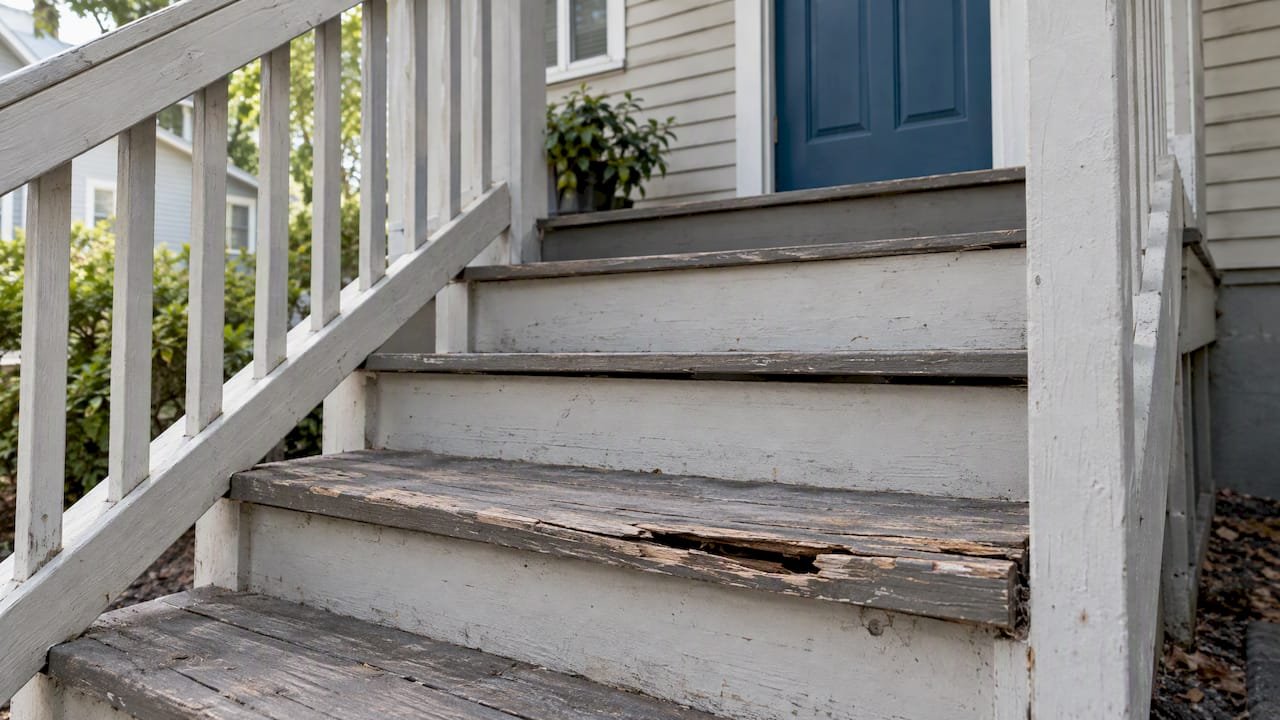
If a tenant’s guest trips on a broken stair and sues, your homeowners liability coverage was not written with that in mind. Landlord liability responds to claims tied to the rental. Premises liability claims can be costly and complicated, and an attorney who handles premises liability injury claims can explain how fault is argued when someone is hurt on a property. Our own landlord liability coverage article covers the protections and the one costly catch.
Your own equipment
If you supply a refrigerator, washer or lawn mower, those belong to you and are covered as landlord property. The tenant’s TV and couch are not.
What neither policy covers
Owning the right type of policy doesn’t close every gap. Look at these before you sign.
Your tenant’s belongings
The NAIC is direct on this: a landlord’s insurance does not extend to a renter’s personal property, and renters should buy their own. Triple-I adds that landlords commonly require tenants to carry renters insurance. Putting that in your lease protects both sides. Our renters insurance guide is a handy resource to hand to new tenants.
Flood
This one matters in a coastal city. The NAIC notes that flood and earthquake are typically excluded from homeowners and renters policies, and dwelling fire policies follow the same pattern. Life near the Savannah River and the marsh is the draw, and it is also the risk. A rental in a low-lying neighborhood needs a separate flood policy. Start with our flood insurance guide, and if your building is worth more than the standard federal limit, look at excess flood coverage.
Special limits and unusual items
Homeowners personal property coverage has special limits for items like jewelry, antiques, collectibles, fine art, firearms and money, and more coverage may require a separate policy or endorsement. If you keep valuables in a house you plan to rent, move them or insure them separately.
Wear, tear and maintenance
No property policy pays for a roof that simply aged out or a slow leak you ignored. Keep maintenance records. They help any claim and help you spot problems early.
How much more does landlord insurance cost?
Expect to pay more. Triple-I says landlord policies generally cost about 25% more than a standard homeowners policy because of the added protections for rent and liability.
Two cautions keep that number in perspective:
- It is an average, not a quote. The NAIC reminds readers that average premiums are an imperfect measure because hazards, economic conditions and real estate values vary widely, and premiums also depend on the coverage and policy choices you make.
- Dwelling fire can be cheaper. The same NAIC report on 2023 data says dwelling fire premiums are generally lower than homeowners premiums, which reflects the more limited coverage dwelling fire policies offer. A bare-bones rental policy can cost less, but you give up breadth.
What moves your price:
- The home’s age, construction and roof condition
- Your location, including wind and flood exposure
- The dwelling limit and your deductible
- Whether you add rent loss, liability limits or higher-value endorsements
- Whether the unit is rented long term or short term
Your deductible is the amount you pay before insurance pays. Raising it lowers your premium, but only choose a number you could cover from savings the day after a loss.
What happens if you rent out a home on a homeowners policy
This is where owners get hurt. You might think a few months of rent is no big deal, but insurers see it differently.
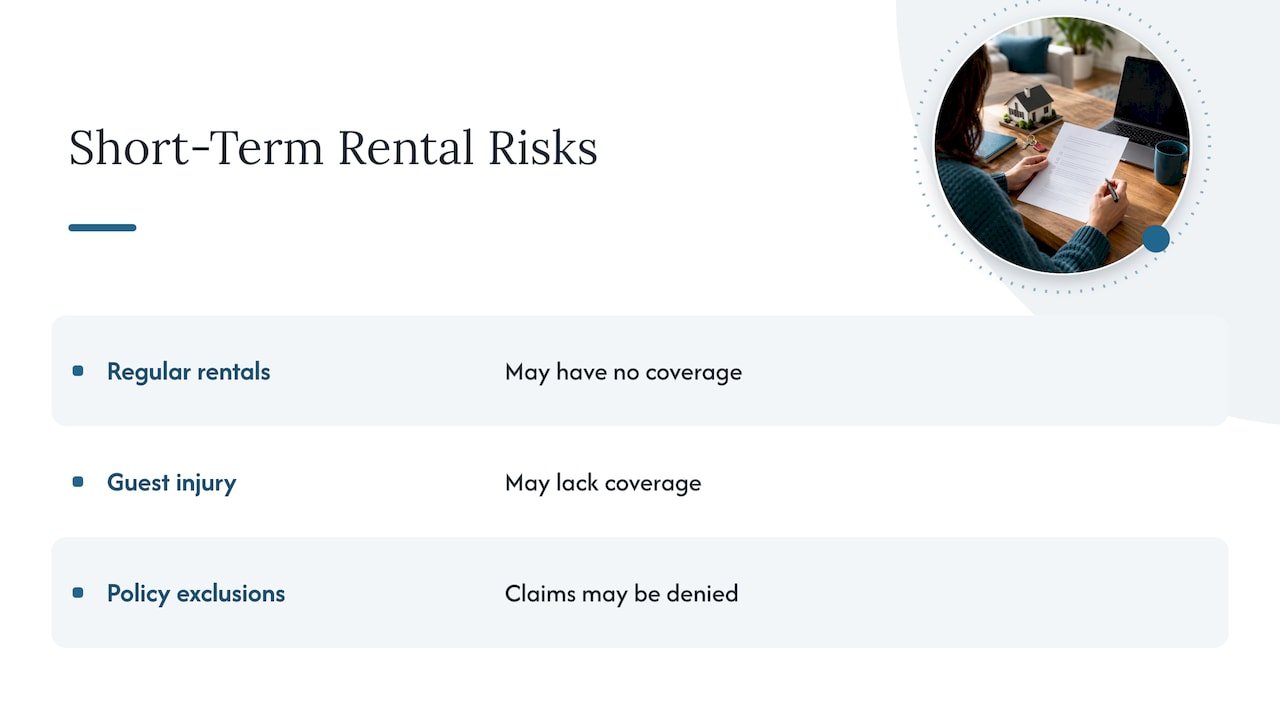
The NAIC’s home-sharing analysis warns that homeowners or dwelling policies may provide no coverage for regularly occurring short-term rentals, especially when the policy contains a rental or business exclusion. It adds that a paying guest’s injury may have no coverage and that insurers may deny claims when those exclusions apply. Occasional rentals can be treated differently, which is why the wording of your own policy matters.
In plain terms: a kitchen fire, a burst pipe or a visitor’s lawsuit could land on your own balance sheet. The fix costs far less than a denied claim. Call your agent before the first tenant or guest arrives.
Which policy fits your situation
Triple-I’s guidance lays out the pattern, and these scenarios apply it.
- You moved out and plan to rent the house to one family. A long-term lease generally calls for a landlord or rental-dwelling policy. Triple-I puts the benchmark at leases to one person, couple or family, for example six months or a year. See our long-term rental insurance guide or the page on landlord insurance in Savannah.
- You rent a room in the home where you live. Triple-I says insurers may allow coverage if you notify them or may require an endorsement. Ask before you list the room.
- You list the home on a short-term rental platform. Regular short-term rentals may call for a hotel or bed-and-breakfast style business policy rather than a standard homeowners policy, per the same source. We cover this in our vacation rental insurance guide and the page for Savannah hosts.
- The house sits empty between tenants or during renovation. Vacancy can change what a policy pays. Read our vacant property insurance guide for how vacancy is defined.
- You own several properties. Insurance is only one layer. Owners with many homes often also weigh service contracts, and this explanation of home warranty versus insurance for multi-home owners shows how those products differ from the owner-occupied and rental policies above.
Our perspective: treat the lease as the trigger
We see the same pattern again and again. An owner takes a job in another city, rents the house to a nice family, and keeps the old homeowners policy because the renewal notice comes automatically. Nothing feels different. Then a claim shows up and the question is who was living in the house.
Our advice, after more than 45 years of working with property owners, is simple. Treat the signed lease, or the first listing, as the moment to call your agent. Not after the first rent check, and not at renewal.
Because we are an independent agency that sells policies for multiple carriers, our job is to match the policy to the property and your budget, not to push one product. We also stay with you when something goes wrong. A good claims experience starts with the right coverage in place and a person who answers the phone when the pipe bursts.
Two habits save landlords the most grief: require renters insurance in every lease, and review your liability limits once a year. If your portfolio is growing, ask about an umbrella or excess liability layer on top.
— Nathan
Get the right rental coverage in Savannah
If you are renting out a home, condo or vacation property in Savannah and the surrounding region, we can review your current policy, explain what changes, and shop coverage that fits your property. Start on our services page or go straight to landlord insurance in Savannah.

If you also own a home you live in, our page on homeowners insurance in Savannah covers that side, so you can keep both properties with one agent.
A checklist before you buy or switch
Whether you are comparing a landlord policy or checking your homeowners policy, review these items with your agent. The NAIC suggests checking the declarations page, coverages, limits, exclusions, endorsements, deductibles, and whether claims are paid at replacement cost or actual cash value.
- Occupancy wording. Does the policy say it applies to an owner-occupied home or a tenant-occupied one?
- Rent loss. Is fair rental value included, and for how many months?
- Liability limit. Is it high enough for your assets, and is there an umbrella layer above it?
- Replacement cost or actual cash value. Replacement cost pays to rebuild without subtracting depreciation. Actual cash value does subtract it.
- Flood. Is the property in a flood zone, and is there a separate policy?
- Vacancy rules. How many days empty before coverage changes?
- Tenant requirements. Does your lease require renters insurance and name you as an interested party?
- Business use. If you run a company that owns several rentals, would a business policy fit better? Our business owners policy page explains one option.
FAQ
Can I keep my homeowners policy if I rent out my house?
Only if your insurer agrees. Standard homeowners policies are written for owner-occupied homes, and many exclude or limit rental use. Tell your insurer before renting. It may offer an endorsement for limited cases or move you to a landlord policy.
Does landlord insurance cover my tenant’s belongings?
No. Landlord insurance covers the building and items you own and leave for tenant use. Your tenant’s furniture and electronics need a renters policy, which many landlords require in the lease.
Is landlord insurance more expensive than homeowners insurance?
Usually, yes. Triple-I says it generally runs about 25% more because it adds protections like lost rent and liability. Your own price depends on the property, its location, your limits and the add-ons you choose.
Does landlord insurance cover flood damage?
Typically not. Flood is commonly excluded from homeowners and landlord-type policies, so rental owners near water in Savannah should price a separate flood policy. The NAIC notes flood and earthquake are usually excluded from standard home policies.
Sources
- Coverage for renting out your home, Triple-I
- Consumer Insight: Leaving Home, Insurance Considerations for a Move, NAIC
- Consumer Insight: Homeowner and Renter, NAIC
- Consumer Insight: Understanding Your Homeowners or Renters Policy, NAIC
- Insurance Implications of Home-Sharing: Regulator Insights, NAIC
- Dwelling Fire, Homeowners Owner-Occupied, and Homeowners Tenant Report, NAIC
- Home & Renters Coverage, Idaho Department of Insurance
- Homeowners and Renters guide, California Department of Insurance
Recommended
- Long-Term Rental Insurance Guide: Landlord Insurance Coverage, Property Types & Everything Rental Owners Need to Know
- Landlord Liability Coverage: 4 Protections, One Costly Catch
- Vacation Rental Insurance Guide: Coverage, Platforms & Everything Short-Term Rental Hosts Need to Know
- Tenant Improvements and Betterments: Who Insures What