
Renters insurance covers pet damage in one direction only. If your dog bites a guest or your cat’s accident ruins a neighbor’s property, the liability part of your policy can pay. If your dog chews the baseboards, scratches the hardwood or shreds your own couch, the policy generally will not. That split is where most renters get surprised, so it’s worth understanding before you need it.
TL;DR
- Covered: Personal liability can pay for injuries or property damage your pet causes to other people, including legal fees and judgments, up to your limit.
- Usually not covered: Chewing, scratching and accidents to the rental itself, and damage to your own belongings. Your landlord may take those repairs from your security deposit.
- Never covered: Your pet’s vet bills. That takes separate pet insurance.
- Watch for: Breed exclusions and bite restrictions. If your dog is excluded, you lose the liability protection that matters most.
- Do this now: Read the liability section of your policy, confirm your limit, and ask in writing how your pet is treated.
Table of Contents
- The two kinds of pet damage
- What renters insurance does cover: liability
- What renters insurance usually does not cover
- Quick reference
- Breed exclusions and the catch most renters miss
- What to check before you sign or renew
- If your pet causes damage or injury: what to do
- Our perspective: ask about the pet before you need the policy
- Talk to a local agent about your pet and your policy
- For landlords: the other side of pet damage
- FAQ
- Sources
The two kinds of pet damage
When people search for pet damage coverage, they are usually asking about one of two very different problems.
Damage your pet does to other people or their property. A dog bites a delivery driver. A dog knocks a visitor down the stairs. A cat tips a candle and the fire spreads to the unit next door. This is a liability problem, and renters insurance is built for it.
Damage your pet does to your home or your things. The torn carpet, the scratched door, the chewed cord, the urine-stained subfloor. This is wear and tear, or a pet-behavior problem, and insurers treat it as something you manage, not something they insure.
Keeping those two apart makes every policy easier to read.
What renters insurance does cover: liability
Standard renters policies include personal liability coverage. According to the Insurance Information Institute, that coverage protects you against lawsuits for bodily injury or property damage you or your family members cause to others, and it extends to damage your pets cause. It pays up to your policy limit.
In practice, liability can respond to:
- Medical bills for someone your pet bit or knocked over.
- Repair or replacement costs for property your pet damaged that belongs to someone else, such as a guest’s phone or a neighbor’s furniture.
- Legal fees and judgments if you are sued. Experian notes that renters liability coverage can pay both when you’re held responsible for a pet’s damage or injury.
These claims are not small. Forbes Advisor, citing the Insurance Information Institute and State Farm, reports that U.S. insurers paid over $1.12 billion in dog-related injury claims in 2023, with an average claim cost of $58,545. One bite can use up a thin liability limit.
How much liability is enough?
The Insurance Information Institute says liability in a standard renters policy generally starts at $100,000, while experts often recommend at least $300,000. If you have a dog, a higher limit is a sensible conversation to have, because the average bite claim above is a big share of a $100,000 limit before legal costs.
If you want more than the policy offers, a personal umbrella adds a layer on top. We cover that on our Savannah umbrella insurance page.
What renters insurance usually does not cover
This is the part of the question the top search results disagree about, so here is the plain version. The liability section pays for harm to others. It does not pay to fix what your pet does to your own space or stuff.
Damage to the rental itself
Your landlord owns the building, and the building is not what your renters policy insures. Your policy covers your belongings and your legal liability. Scratched floors, chewed trim and stained carpet are usually treated as damage you are responsible for through your lease, and landlords commonly deduct the repair cost from your security deposit.
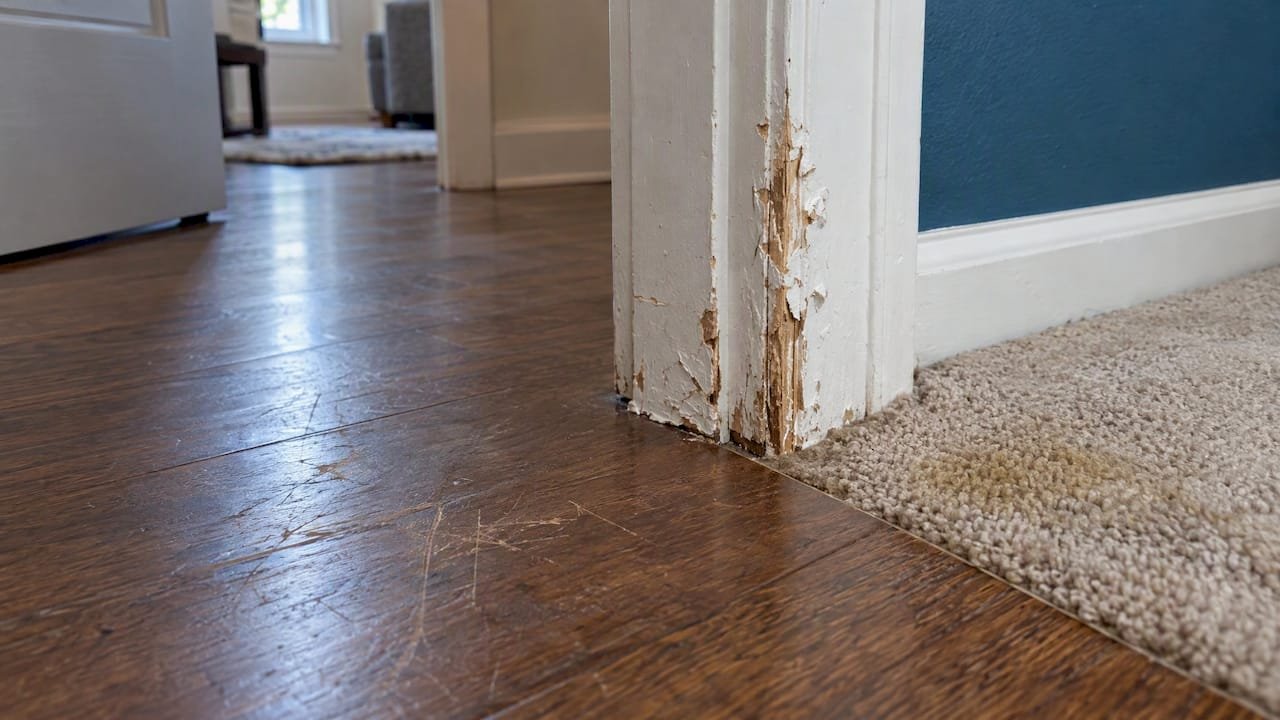
A caution on how it plays out: deposits and pet fees are governed by state law and your lease. In Georgia, for example, a 2024 law caps total deposits at two months’ rent, and pet deposits count toward that cap. Check your own state’s rules, and read your lease for pet addendums.
Sudden events are a gray area worth asking about. A fire your pet accidentally starts is a very different claim from a dog that chews a door for a month. Gradual damage is treated as a maintenance matter. A sudden, accidental event is more likely to be evaluated as a real loss. Ask us how your specific policy words it.
Damage to your own belongings
The same goes for your couch, shoes, rugs and electronics. Personal property coverage is written around named perils like fire, theft and certain kinds of water damage. Damage by your own pet is generally not one of them. Progressive’s guidance on the topic says the same thing in plain terms: your own pet’s damage to your own belongings is outside the policy.
Vet bills
Renters insurance does not pay for your pet’s veterinary care. Per Forbes Advisor, that is the job of separate pet insurance, which in turn does not cover damage or injuries your pet causes to others. The two products solve different problems.
Injuries to your own household
Medical payments coverage in a renters policy may pay a guest’s medical bills if they are hurt in your home. The Insurance Information Institute notes that it typically does not extend to you, your family or your pet. If a family member is bitten by your own dog, expect health insurance, not renters insurance, to be the first stop.
Quick reference
| Situation | Usually covered by renters insurance? |
|---|---|
| Your dog bites a guest or neighbor | Yes, under personal liability, up to your limit |
| Your dog damages a guest’s belongings | Yes, under personal liability |
| You are sued after a pet incident | Legal defense and judgments may be covered under liability |
| Your dog chews your own furniture | No |
| Your cat scratches the landlord’s floors | Generally no; may come out of your deposit |
| Vet bills for your pet | No, that is pet insurance |
| Bite to a member of your own household | Generally no |
| Your breed is excluded on the policy | No liability protection for that animal |
Breed exclusions and the catch most renters miss
The most important line in your policy for pet owners may be the exclusion list. Some carriers restrict or exclude certain dog breeds, dogs with a bite history, or certain exotic animals. Forbes Advisor points out that pet liability is tied to your personal liability coverage, so if your pet is excluded there, you lose that protection.
That has real consequences:
- You may be paying premiums while having no liability cover for the one risk you most worry about.
- Your landlord may also have rules about breeds, regardless of what your policy says.
- Changing carriers can change the answer. Exclusions vary from company to company.
If your policy excludes your pet or breed, Experian says renters can sometimes buy a separate standalone pet liability policy. As an independent agency that works with multiple carriers, we can help you compare how different companies treat your pet before you commit. Our page on getting dog liability coverage in writing explains what to ask for, and Am I covered if my dog bites someone? walks through the typical scenarios.
What to check before you sign or renew
Most pet surprises can be found on paper. Spend twenty minutes on this list.
- Find the liability limit. Is it $100,000 or $300,000? Does it fit your pet and your assets?
- Look for animal or breed language. Search the policy for words like “dog,” “animal,” “bite” and “exclusion.”
- Ask how many pets and which types are acceptable. Say the breed out loud rather than assuming.
- Read your lease pet addendum. It may require renters insurance, set a pet deposit, or hold you responsible for specific repairs.
- Request the coverage summary. Some states require insurers to explain what their policies include. Colorado, for instance, requires insurers to provide summaries of major coverages and exclusions. Georgia renters can ask any agent for the same walkthrough.
- Get answers in writing. An email from your agent about how your dog is treated is worth more than a phone memory.
The Kansas Insurance Department’s shopper guide says it simply: review your policy closely to determine what coverage and exclusions apply. That is good advice in every state.
If you want the broader picture of what a policy includes and what landlords usually require, start with our renters insurance guide.
If your pet causes damage or injury: what to do
When something happens, the first hour matters less than the first few days. A calm, organized response makes a claim smoother.
- Take care of the person. Get medical help if anyone is hurt. Secure your pet so it can’t cause more harm.
- Contact your insurer or agent immediately. The Insurance Information Institute advises contacting your insurer right away.
- Document everything. Photograph or video the damage, list damaged items, and don’t throw them away until an adjuster has seen them.
- Gather basics. Get names and contact details of anyone involved, and note what happened while it’s fresh.
- Don’t admit fault or promise payment. Let your insurer handle negotiations. If someone threatens a lawsuit, tell your agent at once.
- Follow up. Claim timelines depend on your state. In Kansas, for example, regulations give an insurer 30 days to finish investigating a claim or explain why it isn’t finished. Georgia has its own timelines, and your agent can tell you which apply.
Good records also help if the claim turns into a dispute. This overview of property damage claims explains how damage claims are generally built and why documentation carries so much weight.
Our perspective: ask about the pet before you need the policy
We’ve spent more than 45 years helping Savannah families, renters and landlords, and the pet conversations we have after a claim are rarely the ones we’d have chosen. The renter assumed the dog was covered, and nobody asked until something happened.
Here’s how we see it. Renters insurance is one of the least expensive ways to protect yourself from a very expensive event, and a dog bite is exactly that. But the policy only works if it fits the animal on your couch. A good agent doesn’t just sell you a form. They ask about the breed, the lease, your limits and whether an umbrella makes sense, and they put the answers in writing.
We also encourage renters not to treat insurance as a substitute for training, crates, fences and good habits. Insurance pays for accidents. It doesn’t pay to keep a landlord happy with the apartment you live in.
— Nathan
Talk to a local agent about your pet and your policy
We work with multiple carriers, so we can look at how different companies handle your dog, your cat and your liability limit, then recommend the setup that fits. If you’re renting in Savannah or the surrounding area, we’ll go through the pet question line by line, and our services page lists everything we offer, from renters and condo coverage to umbrella protection.

Ready to confirm your pet is protected? Contact Daly & Alexander Insurance for a renters insurance review.
For landlords: the other side of pet damage
If you own the rental, the picture flips. Tenant pet damage to your building is not what a tenant’s renters policy pays for, and your own landlord policy has its own rules about wear, tear and animals. Our landlord liability coverage page and long-term rental insurance guide explain how liability and property coverage work together, and why requiring tenants to carry renters insurance with adequate liability is a smart lease term.
FAQ
Does renters insurance cover pet damage?
It covers damage and injuries your pet causes to other people and their property, through the personal liability portion of the policy. It generally does not cover damage your pet does to the rental or to your own belongings. Limits and exclusions apply.
Will my landlord charge me for pet damage even if I have renters insurance?
Very likely, yes, if the damage is to the unit itself. Repairs for scratches, chewing and stains are typically deducted from your security deposit or billed under your lease. Renters insurance is not designed to reimburse that cost.
Does renters insurance cover my dog’s vet bills?
No. Veterinary care is covered, if at all, by separate pet insurance. Pet insurance, in turn, does not pay for damage or injuries your pet causes to others, so the two policies do different jobs.
What if my dog’s breed is excluded?
Then your policy won’t provide liability protection for incidents involving that dog. Ask your agent about carriers that handle your breed differently, or about a standalone pet liability policy. Don’t wait until after a bite to find out.
How much liability coverage should a pet owner carry?
Standard renters liability often starts at $100,000, and experts commonly suggest at least $300,000. Dog owners should think hard about the higher end, and an umbrella policy can add more on top.
Sources
- Insurance Information Institute: Renters insurance guide (PDF)
- Forbes Advisor: Pet Liability Insurance For Renters
- Experian: Does Renters Insurance Cover Pet Damage?
- Kansas Insurance Department: Home and Renters shopper’s guide (PDF)
- Colorado Division of Insurance: Renters insurance
- TurboTenant: Georgia security deposit law
- The Law Office of John Vernon Moore: Property damage claims