
Service line coverage is a homeowners insurance add-on that pays to repair or replace damaged underground utility lines and covers the digging required to fix them. It matters most if your home has aging pipes, mature trees near the yard, or local rules that make you responsible for the lateral line running to the street. For homeowners who fit that profile, it closes a real gap that standard policies leave open.
TL;DR:
- Service line coverage typically costs $20 to $50 annually, with a common limit of around $10,000 and a deductible near $500, which may be insufficient for extensive or complex repairs.
- It excludes septic systems, private wells, above-ground lines, and preexisting damages, requiring homeowners to verify municipal responsibility for lateral lines before purchasing.
- Repair costs can increase significantly if lines cross paved surfaces or run under streets, making higher limits or specialized coverage potentially necessary for older or more extensive infrastructure.
- Homeowners with older homes, mature trees near utility lines, or prior lateral issues face higher risks of damage, especially if local rules make them responsible for underground lines under public streets.
- Asking local water or sewer departments about liability boundaries and thoroughly reviewing policy language ensures appropriate coverage rather than relying solely on premium comparisons.
Table of Contents
- What does service line coverage actually include?
- What’s excluded, and how does it overlap with other coverage?
- What does it cost, and how far do the limits stretch?
- Who actually needs this coverage? A quick risk checklist
- How do claims and repairs actually play out?
- How do you buy it and what should you ask your agent?
- Why trust this guidance, and how we can help
- What most homeowners get wrong about this coverage
- Get your policy reviewed for service line coverage
- FAQ
- Sources
What does service line coverage actually include?
Standard homeowners policies rarely touch the pipes and wires running under your yard, which is exactly what this endorsement fills in. Coverage typically applies to several types of underground lines:
- Water lines carrying fresh water into your home
- Sewer lines connecting your house to the municipal system
- Natural gas lines feeding appliances and heating
- Electric lines running underground to the house
- Communication lines for phone, cable, or internet service
Beyond replacing the damaged line itself, the endorsement usually pays for the excavation needed to reach it, restoring landscaping disturbed by the dig, and sometimes temporary repairs to keep water or gas flowing while permanent work gets scheduled.
Service line coverage can pay to fix damaged water, gas, sewer, electric, or other underground utility lines, and it often extends to excavation and landscape restoration, according to NerdWallet’s breakdown of the coverage. Policies typically carry a per-claim limit, often around $10,000, with a deductible commonly near $500. Those numbers matter because a single excavation job can eat through a limit quickly once labor, equipment, and restoration costs stack up.
What’s excluded, and how does it overlap with other coverage?
Service line coverage has boundaries, and knowing them prevents surprises during a claim.
- Septic systems are typically excluded entirely
- Private wells usually fall outside the endorsement
- Above-ground lines aren’t covered since the add-on targets buried infrastructure
- Preexisting damage found during a claim investigation is generally denied
This coverage also shouldn’t be confused with sewer backup and interior water damage coverage, which addresses water that backs up into your home rather than a break in the line itself. They’re separate protections, often sold as separate endorsements. Municipal boundaries add another wrinkle: in some cities, you may be responsible for the lateral even where it crosses under public streets, according to Policygenius.
What does it cost, and how far do the limits stretch?
Premiums for this endorsement are modest compared to the repair bills they offset. Service line coverage commonly costs between $20 and $50 per year, with some policies advertised as low as $9 annually depending on your insurer and home’s age, per NerdWallet. Deductibles usually land around $500, and per-claim limits often cap near $10,000.
That limit sounds generous until you factor in what pushes repair costs higher:
- Excavation under a driveway or mature landscaping adds labor hours
- Work crossing into a public street often requires permits and traffic control
- Pipe material and depth affect how much digging is needed
Homeowners with longer driveways, older infrastructure, or lines running under paved surfaces should consider whether the standard $10,000 limit covers a realistic worst-case repair, or whether a higher limit is worth the extra premium.
Who actually needs this coverage? A quick risk checklist
Not every homeowner needs this endorsement, but certain conditions raise the odds you’ll eventually use it. Walk through these risk factors:
- Home age: Houses built before the 1980s often have original clay, cast iron, or galvanized pipe that’s more prone to failure.
- Pipe material: Clay and cast iron are more vulnerable to cracking and corrosion than modern PVC.
- Mature trees: Root systems near sewer or water lines are a common cause of breaks.
- Past lateral issues: A prior repair often signals the rest of the line is aging out too.
- Municipal liability rules: Some cities hold homeowners responsible for the entire lateral, even sections under the street.
If two or more of these apply to your property, service line coverage is worth a serious look. If none do, a municipal protection program or a sewer backup endorsement alone might be enough.
Pro Tip: Call your city’s water department and ask directly where their responsibility ends and yours begins. It’s often a five-minute call that clarifies your actual exposure.
How do claims and repairs actually play out?
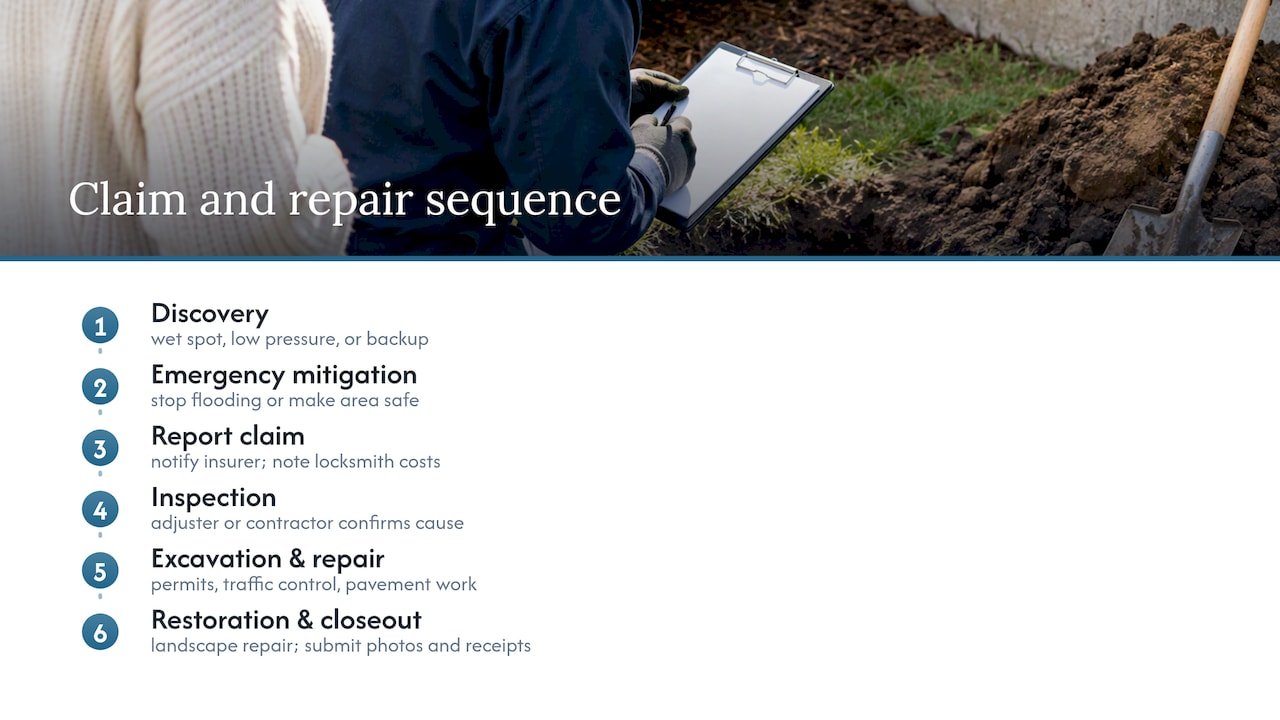
A service line claim follows a fairly predictable sequence. First comes discovery, usually a wet spot in the yard, a drop in water pressure, or a sewer backup. Emergency mitigation follows if there’s active flooding or gas smell, then you report the claim to your insurer, understanding how insurance covers locksmith costs can be useful for related emergency services. An adjuster or contractor inspects the line to confirm the cause and scope, followed by the actual excavation, permit work, and repair. Landscape restoration closes out the job.
Work that touches a public road often adds cost beyond the pipe itself. Permits, licensed contractor requirements, traffic control plans, and pavement restoration to the city’s standard can add meaningfully to the final bill.
Keep photos of the damage, a copy of any plumber’s diagnosis, and receipts for emergency mitigation. That documentation speeds up the insurer’s review and reduces back-and-forth.
How do you buy it and what should you ask your agent?
Before adding this endorsement, get specifics in writing rather than relying on a general description. Ask for:
- Which lines are covered (water, sewer, gas, electric, communications)
- Which causes of damage are included and excluded
- The per-claim limit and deductible amount
- Whether landscape restoration and temporary repairs are included
- Whether the endorsement coordinates with any municipal protection program you already pay into
Pro Tip: Compare the actual endorsement wording across quotes, not just the premium. A cheaper add-on with a lower limit or narrower list of covered lines can cost you more at claim time.
Our guide on understanding your homeowners policy walks through how endorsements like this attach to your base HO-3 or similar form.
Why trust this guidance, and how we can help
We bring extensive experience helping homeowners sort through coverage decisions like this one. Our agents review your existing policy wording, flag where service line coverage would help, and advocate on your behalf if a claim gets complicated. We write homeowners, flood, and a full range of personal lines policies, which means we see how these endorsements perform across many different properties and claims.
What most homeowners get wrong about this coverage
Most advice on service line coverage treats it as a simple yes-or-no checkbox, buy it if you’re worried about old pipes. That’s incomplete. The real variable is municipal liability, and most homeowners never check it. You can own a brand-new house with modern PVC piping and still be on the hook for a lateral failure under the street, simply because your city assigns that responsibility to property owners.
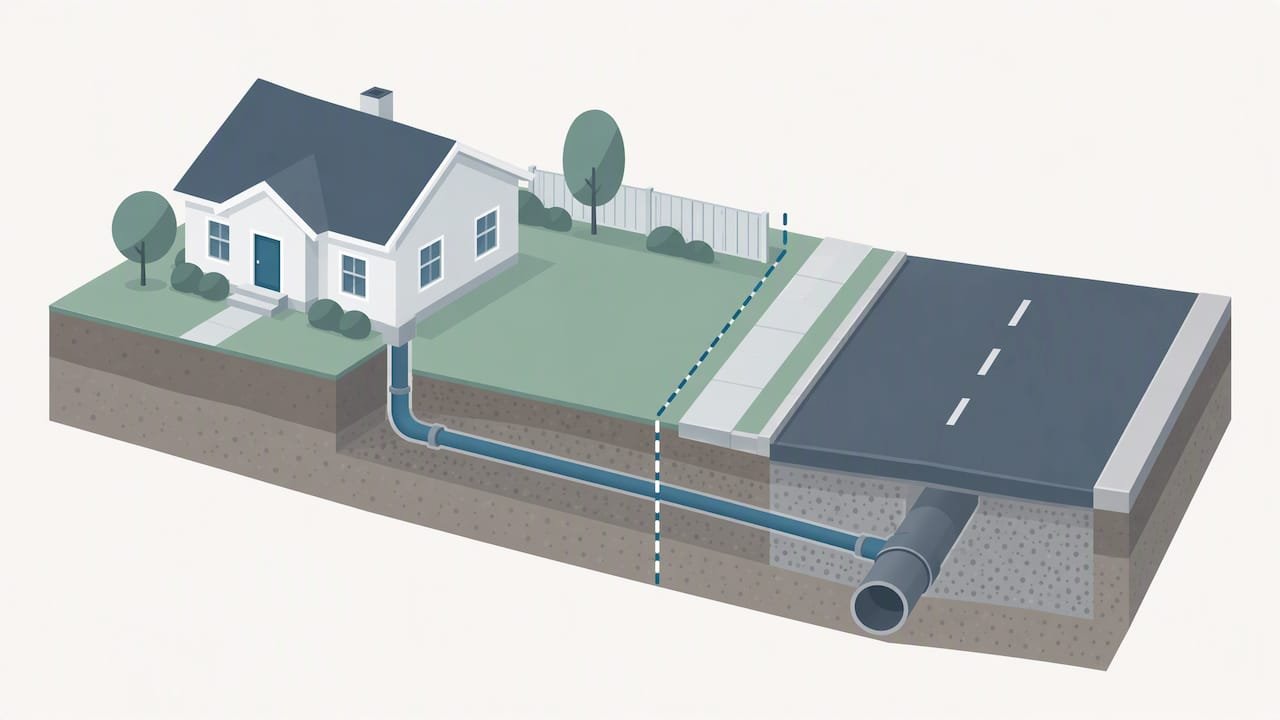
Our view: skip the generic age-of-home calculation and start with a phone call to your water or sewer department. Find out exactly where your liability starts and ends. Then compare that answer against your policy’s limit, not the other way around. A $10,000 limit might be plenty for a short residential line and nowhere near enough for a lateral that runs fifty feet under a city street.
The second overlooked priority is reading the actual endorsement language before buying, not after a pipe fails. Limits, covered causes, and exclusions vary enough between insurers that price alone tells you very little.
— Nathan
Get your policy reviewed for service line coverage
We help homeowners figure out whether their current policy already includes service line protection or needs an endorsement added based on your home’s age, pipe material, and local lateral rules.

Bring your current declarations page, any prior repair records for water or sewer lines, and a rough sense of your yard’s layout (driveway length, mature trees, distance to the street). From there, we can walk through your homeowners insurance options and recommend coverage that matches your actual risk rather than a generic package.
What we help with during a review:
- Checking whether service line coverage is already included or needs adding
- Comparing limits and deductibles against your home’s likely repair costs
- Explaining how this coverage interacts with sewer backup protection
- Answering questions about municipal lateral responsibility in your area
Reach out to request a quote or schedule a coverage review.
FAQ
What is included in service line coverage?
Service line coverage typically pays to repair or replace damaged underground water, sewer, gas, electric, or communication lines, along with the excavation needed to reach them. Many policies also cover landscape restoration and temporary repairs, according to NerdWallet.
What is not covered by service line coverage?
Septic systems, private wells, and above-ground lines are generally excluded from this endorsement. Damage that existed before the policy took effect is also typically denied during a claim investigation.
Is sewer backup insurance worth it?
Sewer backup coverage addresses a different risk than service line coverage: water or waste backing up into your home rather than a break in the line itself. Pairing the two gives broader protection, since a damaged lateral and a backup event are separate failure points that can each cause significant damage.
How does service line coverage differ from sewer backup coverage?
Service line coverage pays for repairing the physical pipe or wire and the digging involved, while sewer backup coverage pays for interior damage when sewage or water backs up into your home. They’re sold as separate endorsements and address different stages of a utility failure.
Am I responsible for the utility line running under the street?
In some municipalities, homeowners are responsible for the entire sewer lateral, including the portion running under public streets, according to Policygenius. Check with your local water or sewer department to confirm where your liability actually ends.