
If your Savannah home sits in Flood Zone X, federal rules generally do not make you buy flood insurance. That does not mean you should skip it. Zone X is a moderate-to-low risk label, not a promise of dry floors, and standard homeowners policies leave flood damage out. This guide explains what Zone X really means, what a flood policy costs you in terms of decisions (not guesses), and how to choose coverage for a low-country home.
TL;DR
- Zone X is FEMA’s moderate-to-low risk designation outside the Special Flood Hazard Area. Risk is reduced, not eliminated.
- Federal law does not require flood insurance in Zone X, but some lenders still ask for it, and your homeowners policy will not pay for flood damage.
- The old Preferred Risk Policy is gone. Premiums now follow your property’s own characteristics, not just the zone letter.
- New policies carry a 30-day waiting period, so buy before a storm is in the forecast.
- We can check your address, compare NFIP and private options, and quote you. Start with flood insurance in Savannah.
Table of Contents
- What Flood Zone X actually means
- Is flood insurance required in Zone X?
- What your homeowners policy does not cover
- Zone X, AE and VE compared
- What happened to the Preferred Risk Policy
- What NFIP coverage can pay
- The 30-day rule: why timing is everything
- Our perspective: why we suggest Zone X owners price it out
- How to decide, step by step
- If you ever have to file a claim
- Get a Zone X flood quote in Savannah
- FAQ
- Sources
What Flood Zone X actually means
FEMA draws Flood Insurance Rate Maps (FIRMs) that sort land into zones by flood risk. Zones starting with A and V are high risk and make up the Special Flood Hazard Area. Zone X sits outside that boundary. According to FEMA’s FloodSmart zone guide, it is a moderate-to-low risk area.
You may see two versions on a map:
- Shaded Zone X: moderate risk, generally the area between the high-risk boundary and the edge of the larger, rarer flood.
- Unshaded Zone X: minimal risk, outside both.
Both are lower risk than an AE or VE zone. Neither is a guarantee. The same FloodSmart page notes that from 2014 to 2024, nearly one-third of all NFIP claims came from areas outside high-risk flood zones. In plain terms, roughly one in three claims came from places people assumed were safe.
That matters in Savannah. Life near the river, the marsh and the barrier islands is the draw, and flat ground, tidal creeks and heavy summer downpours are the risk. Chatham County’s own emergency management office says that parts of the county are low-lying coastal plains susceptible to flooding, and that flood insurance is also available for structures in Zone X.
Is flood insurance required in Zone X?
Generally, no. Federal flood insurance requirements attach to federally backed mortgages on buildings in high-risk zones in communities that take part in the NFIP. Zone X is outside that boundary, so the federal mandate does not apply.
Three caveats keep “not required” from becoming “not needed”:
- Your lender may still ask. Lending rules are a floor, not a ceiling. Some lenders and some loan types set their own conditions. Check your closing documents.
- Maps change. A property can be remapped into a high-risk zone, and areas behind levees that lose accreditation can be affected too. FEMA’s guidance for real estate and lending professionals explains that sellers should disclose when a building is in or about to be in a high-risk area.
- Flooding does not read maps. A clogged drain, a stalled storm or a surge over a low street can put water in a Zone X living room.
If you are buying, ask your agent to confirm the zone for the exact address, not the neighborhood. Savannah’s city government also points residents to a local mapping tool, SAGIS, where you can look up your property’s flood zone and ground elevation.
What your homeowners policy does not cover
FEMA is direct on this: standard homeowners insurance does not cover flood. Flood is an excluded peril. FEMA also suggests considering flood insurance even when you are not required to buy it or live outside a high-risk area.
The split between wind and water is where claims get tricky. An NFIP policy covers damage directly caused by flooding, such as rising water or storm surge. Rain pushed in by wind through a damaged roof or wall is not flood damage under that definition. According to FEMA’s reference guide for state insurance commissioners, that type of loss is typically handled by standard homeowners insurance.
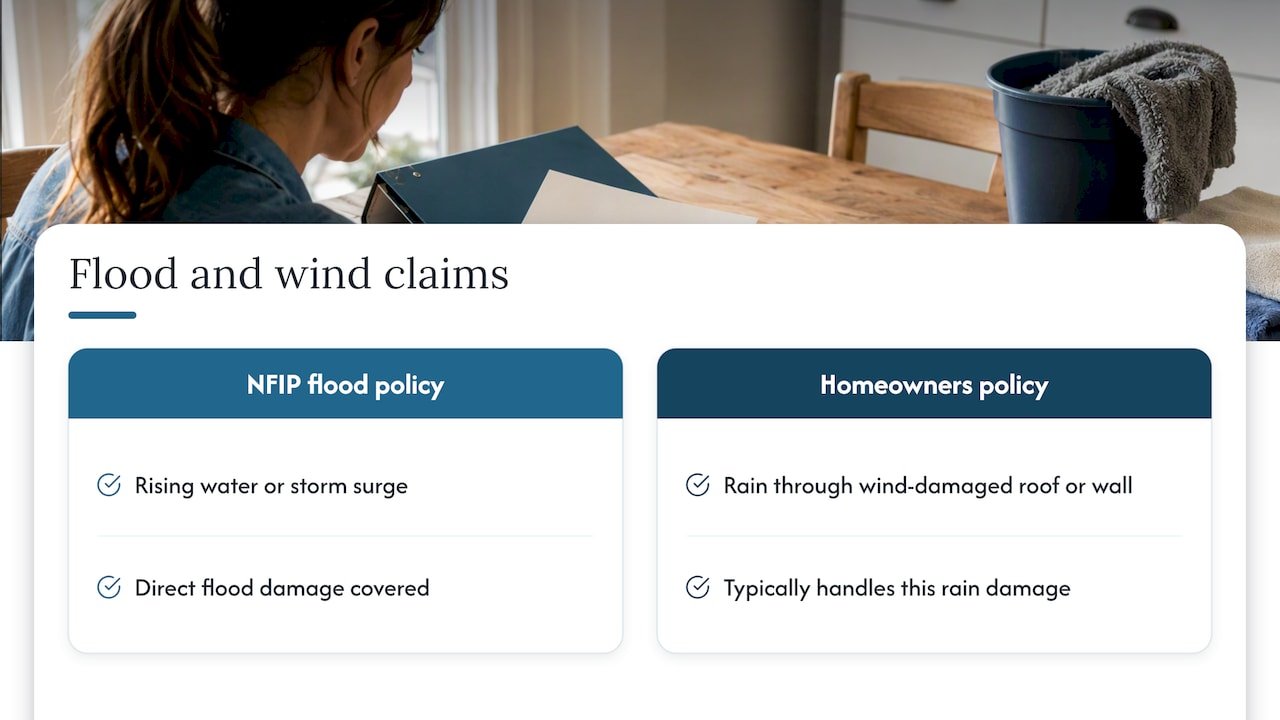
So a hurricane can trigger two claims on one house: wind under your homeowners policy, water under your flood policy. We explain how that plays out locally in does my Savannah homeowners policy cover flood damage from storm surge or heavy rain, and our homeowners policy breakdown covers what the rest of your coverage does.
Zone X, AE and VE compared
| Zone X | Zone AE | Zone VE | |
|---|---|---|---|
| Risk level | Moderate to low | High | High, coastal |
| Where | Outside the Special Flood Hazard Area | Inside the Special Flood Hazard Area | Coastal areas with added wave hazard |
| Federal mortgage requirement | No | Yes, in participating communities | Yes, in participating communities |
| Flood insurance available | Yes | Yes | Yes |
The zone descriptions come from FEMA’s flood zone page. Note that “is zone A or X worse?” has an easy answer: A is higher risk. But the better question is whether the building in front of you, at its elevation, with its drainage, is likely to take on water.
What happened to the Preferred Risk Policy
Many older articles recommend a “preferred risk” flood policy for Zone X homes. That product is no longer offered. With Risk Rating 2.0, FEMA’s Preferred Risk Policy is no longer available, and rates now reflect each property’s own characteristics, such as elevation, distance to a flood source and the cost to rebuild.
What this means for you:
- Two Zone X houses on the same street can have different premiums.
- Some Zone X owners saw premiums drop, while others see gradual increases, limited by the annual statutory cap.
- Details about your own home, including its foundation and elevation, shape your price more than the letter on the map.
This is also why we do not quote a flat “Zone X price” here. Anyone who does is guessing. A real number needs your address.
What NFIP coverage can pay
The National Flood Insurance Program is run by FEMA and sold through insurance companies and agents. FEMA’s flood insurance page describes a network of more than 47 insurance companies delivering it. The limits, per FEMA’s coverage overview:
- Residential building: up to $250,000
- Residential contents: up to $100,000
- Business property: up to $500,000 for the building and $500,000 for contents
Policies pay for direct physical flood damage, and they pay even if no federal disaster is declared.
Two choices matter more than most people expect:
You do not have to insure to the maximum. FEMA’s summary of coverage shows you can choose amounts that fit your finances.
Replacement cost versus actual cash value. Replacement cost pays for brand-new items. Actual cash value subtracts depreciation. The Georgia Office of Commissioner of Insurance explains the same distinction for homeowners. Ask which one applies to your building and to your belongings, because a ten-year-old sofa and a ten-year-old roof are treated very differently.
If your home is worth well above $250,000 to rebuild, NFIP limits may leave a gap. Private flood and excess flood coverage can sit on top. Our excess flood guide explains how those layers work, and private flood versus NFIP in Savannah walks through the cost question.
The 30-day rule: why timing is everything
New NFIP policies generally have a 30-day waiting period. FEMA’s agent guidance confirms it, with narrow exceptions such as post-wildfire conditions. FEMA’s research summary also notes the rule is waived for new, federally backed mortgage closings.
In practice, this means the day a tropical system shows up on the forecast is the day you can no longer buy useful protection for it. Georgia’s Insurance Commissioner has urged homeowners to review coverage with an agent well before hurricane season, not once a storm is imminent. Chatham County’s emergency office repeats the 30-day point for local residents.
Our perspective: why we suggest Zone X owners price it out
We are a local Savannah agency with more than 45 years of experience, and the Zone X conversation is one we have often. Here is how we think about it.
The zone label is a starting point for your lender, not a forecast for your house. We would rather you get a real quote and decide with numbers than skip coverage because a map said “low risk.” For many Zone X homes, the flood policy is a small line next to the cost of drying out, tearing out drywall and replacing flooring and appliances.
We also like to ask a few plain questions before recommending anything:
- How high is the lowest floor compared with the street and the nearest creek or marsh?
- Has the property or the block ever taken on water?
- Could you cover a five-figure repair from savings tomorrow?
- Is a mortgage lender asking for coverage?
If the answers point to comfortable elevation and healthy savings, you may reasonably choose a lean policy or none. That is your decision, and we respect it. But it should be a decision made on a quote, not an assumption.
One more thing: because we work with multiple carriers, we can compare an NFIP policy with private options for your address instead of handing you the only product we sell.
— Nathan
How to decide, step by step
- Confirm the zone for your exact address. Use the FEMA map service or Savannah’s SAGIS lookup, and ask us to double-check.
- Check your elevation. Chatham County and the city explain that an elevation certificate or a Letter of Map Amendment can matter to your premium. The city page asks owners to look at lowest grade and base flood elevation when judging eligibility.
- List what you would have to replace. Flooring, drywall, HVAC, water heater, appliances, furniture. Total it honestly.
- Get quotes for building and contents separately. Renters and condo owners can often insure contents alone, and Chatham County says renters can buy contents coverage even when the owner has no structural policy.
- Pick limits and deductibles you can live with. Go for a number that protects your finances, not a number that merely looks big.
- Buy early. Put the 30-day clock behind you before storm season.
If you ever have to file a claim
Report the loss to your agent or carrier right away. FEMA’s coverage summary describes the usual sequence:
- Separate damaged items from undamaged ones.
- Photograph or video the damage before cleanup or disposal, unless an item is a health hazard.
- Gather receipts and invoices.
- File a Proof of Loss within 60 days of the event.
An adjuster then verifies the damage, and payment follows your policy’s replacement cost or actual cash value terms. Claims are the moment you find out whether your agent works for you. Ours helps you through the paperwork, with a focus on recovering quickly.
Get a Zone X flood quote in Savannah
We sell personalized property and casualty coverage to Savannah homeowners, families, landlords and small business owners, including flood insurance, homeowners insurance and commercial flood coverage. Tell us your address and we will confirm your zone, explain your options and put the numbers in front of you. See everything we offer on our services page, or read the full flood insurance guide first.
FAQ
Should you get flood insurance in Zone X?
In most cases it is worth pricing. Zone X is moderate-to-low risk, not no risk, and nearly a third of NFIP claims in a recent ten-year span came from outside high-risk zones. Your homeowners policy will not cover flood damage, so the choice is between a premium and paying for repairs yourself.
Is flood zone X good or bad?
It is the better side of the map. Zone X is outside the Special Flood Hazard Area, so the federal mortgage requirement does not apply. It is still a statistical label, and individual homes in Zone X do flood.
Is there still a preferred risk flood policy?
No. Under Risk Rating 2.0 the Preferred Risk Policy is no longer offered, and premiums now reflect your property’s own features, such as elevation and rebuild cost. Many Zone X owners can still find affordable coverage, but the price depends on the specific home.
Should I buy a house in flood zone X?
It is a favorable sign, not a verdict. Before you close, confirm the zone for the exact address, ask about past water damage, check elevation and get a flood quote so the cost is part of your budget. Remember the 30-day waiting period, which is waived for new federally backed mortgage closings.
Sources
- What Is My Flood Zone, FloodSmart (FEMA)
- Flood insurance overview, FEMA
- Flood coverage overview, FEMA
- NFIP Summary of Coverage
- NFIP Desk Reference Guide for State Insurance Commissioners
- Risk Rating 2.0 FAQs
- Wildfire Exception and waiting period, NFIP for Agents
- Real estate, lending and insurance professionals, FEMA
- Commissioner King: Get Ahead of Hurricane Season, Georgia OCI
- Flooding, Chatham Emergency Management Agency
- Flood Protection Information, City of Savannah