
If you are serving alcohol at your event, you need event liability coverage that includes host liquor liability, or a liquor liability policy if you are selling drinks. Venues commonly ask for $1 million in coverage with the venue listed as additional insured, and many insurers can issue a certificate the same day. Get this sorted before you sign a venue contract, not after.
TL;DR:
- Most venues require at least $1 million in liquor liability coverage with the venue listed as additional insured before booking the event.
- Host liquor liability covers third-party injuries or property damage when alcohol is provided for free, while liquor liability (dram shop) applies when alcohol is sold or served for pay.
- Premium costs vary depending on event size, duration, and whether alcohol is sold, often ranging from a few hundred dollars for small private events to over a million dollars for large festivals.
- Certificates of insurance and proof of liquor liability are needed before signing contracts, with many insurers able to issue proofs the same day.
- Public events with alcohol sales typically require higher coverage limits and may need specific permits or local government minimums.
Table of Contents
- What alcohol event insurance actually covers
- What limits and premiums look like for your event
- What venues and permits require before you sign
- How to buy coverage fast and get your certificate
- How an agent helps you avoid costly surprises
- How to size up your event’s risk before you buy
- What happens if you need to file a claim
- Private party or public event: how requirements differ
- A local agent’s take on getting this right
- Get a fast event insurance quote from a local agent
- FAQ
- Sources
What alcohol event insurance actually covers
Two coverages do most of the work here, and they are not interchangeable. Event liability with host liquor liability protects you against third-party bodily injury and property damage when you provide alcohol at a private gathering without charging for it, like an open bar at a wedding reception. Liquor liability, sometimes called dram shop coverage, applies when alcohol is sold or served for a fee, such as a beer festival with ticketed drink tokens or a caterer pouring wine at a paid event.
According to NAIC consumer guidance on event insurance, these are genuinely distinct products, and your policy wording needs to match how alcohol moves at your event. A host pouring free wine for guests has a different exposure than a vendor selling cocktails by the glass, and insurers underwrite them differently.
Here is how the pieces break down:
- Event liability covers bodily injury and property damage claims from third parties during your event.
- Host liquor liability extends that protection to alcohol-related incidents when you are not selling the drinks.
- Liquor liability (dram shop) covers businesses or vendors that sell or serve alcohol for compensation.
- Cancellation insurance is a separate policy entirely, reimbursing deposits and rescheduling costs if the event gets postponed.
That last point trips people up constantly. Liability insurance will not reimburse you if a hurricane forces you to reschedule your outdoor reception. Cancellation coverage handles weather, vendor no-shows, and similar disruptions, though most policies exclude pandemics or communicable disease unless you add that protection specifically.
What limits and premiums look like for your event
Venues rarely leave coverage amounts to your imagination. Here is what to expect:
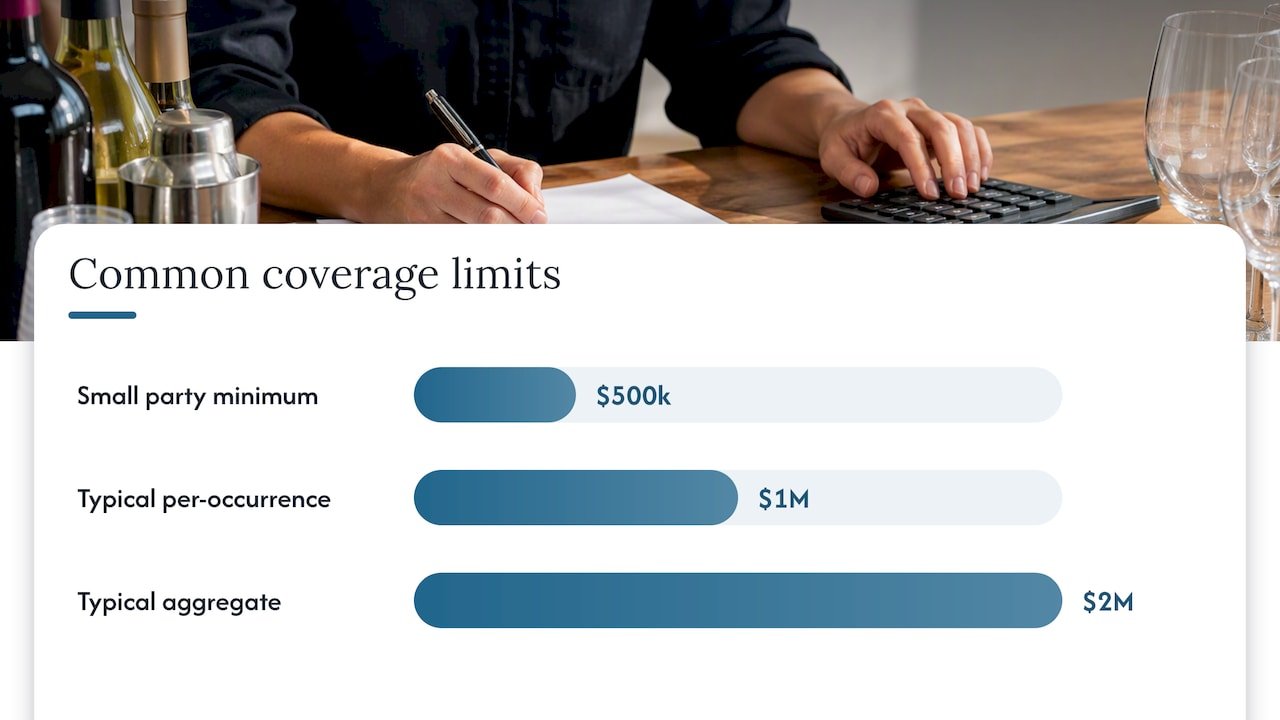
- $500,000 per occurrence is the floor for many small private parties, though some venues will not accept less than $1 million.
- $1 million per occurrence with $2 million aggregate is the most common venue requirement, especially for weddings and corporate gatherings.
- Higher limits or umbrella endorsements come into play for larger public events, beer festivals, or anything involving hundreds of attendees and alcohol sales.
Premiums scale with your actual risk, not just your guest count. A 50-person backyard anniversary party with a hired bartender costs far less to insure than a 500-person beer fest where alcohol changes hands for money. Duration matters too: a four-hour reception is a smaller exposure than a weekend-long festival. If you are selling alcohol rather than hosting it for free, expect the underwriter to ask more questions and price accordingly, since liquor liability carries real legal and medical cost exposure tied to intoxicated-guest incidents.
For larger events, some organizers add umbrella limits on top of a standard policy rather than rely on a single high-limit event policy. It is worth asking your agent which approach is cheaper for your specific situation.
What venues and permits require before you sign
Most venue contracts will not let you book the date without proof of insurance in hand, and that proof has specific requirements. A standard certificate of insurance lists your policy limits, effective dates, and the venue as “additional insured,” which means the venue’s own policy stays clean if a claim arises from your event.
Some venues also want a waiver of subrogation, which keeps your insurer from later going after the venue to recover claim costs. If your event requires a local liquor license or temporary permit, that often changes what the insurer requires, since licensed events can carry different liability exposure than casual private gatherings.
If you are hiring a bartender or catering company that pours alcohol, confirm their own liability coverage separately. Their insurance protects their service; it does not automatically protect you as the event host.
Before signing anything, request:
- A sample certificate of insurance showing your limits and the additional-insured endorsement
- Written confirmation of host liquor liability or liquor liability, whichever applies
- Proof of insurance from any vendor serving alcohol
How to buy coverage fast and get your certificate
Buying event alcohol insurance is faster than most people expect, but insurers need specific details upfront. Have this ready:
- Your event date, location, and expected attendance
- Whether alcohol is sold or provided for free
- Names and insurance status of any bartenders or vendors
- The limit your venue requires
You can buy through a local agency, directly from an agency’s website, or through online event-insurance platforms built for one-time policies. Many insurers issue certificates instantly or within the same business day once your information checks out, which matters when a venue wants proof before finalizing your contract.
Pro Tip: Buy your policy at least two to three weeks before vendor contracts are due, giving yourself time to fix certificate wording issues before deadlines get tight.
How an agent helps you avoid costly surprises
Choosing between host liquor liability and full liquor liability is not always obvious, and getting it wrong can leave a real gap in coverage. A local agent reviews your event details, confirms the certificate wording your venue actually wants, and checks competitive rates across carriers rather than locking you into one insurer’s template.
Daly & Alexander Insurance works with Savannah-area event hosts on event insurance and liquor liability policies, backed by over 45 years of experience in property and casualty coverage, with agents who assist directly if a claim comes up.
When you call an agent, ask whether your venue’s specific additional-insured wording is already something they handle, and whether your certificate can be issued the same day.
How to size up your event’s risk before you buy
Start with three questions: how many people are coming, how long does the event run, and is alcohol being sold or just served. Each answer pushes your risk up or down.
A 30-person dinner party with wine poured by the host carries modest risk. A 300-person outdoor festival with ticketed drink sales, a DJ, and a dance floor carries considerably more, since alcohol combined with crowds and activity raises the odds of an incident.
Walk through your venue and guest list honestly:
- Attendance size determines how much foot traffic and potential injury exposure you are managing.
- Alcohol format (open bar, cash bar, BYOB) changes which coverage you need and how much.
- Activities like dancing, pools, or fireworks add exposure beyond the alcohol itself.
- Venue type (private home, rented hall, outdoor public space) affects what the location’s own insurance already covers.
Once you have an honest picture, match your coverage limit to it. A backyard birthday party rarely needs more than $500,000 in coverage. A ticketed outdoor festival serving hundreds of guests alcohol for money usually needs $1 million or more, often with liquor liability specifically named rather than assumed under a general policy.
What happens if you need to file a claim
If an incident happens at your event, the process generally follows a predictable path. Contact your insurer or agent as soon as possible, ideally within 24 to 48 hours, and avoid admitting fault or making promises to the injured party while the claim is pending.
Your insurer will ask for documentation: incident reports, photos of the scene, contact information for witnesses, and any police or venue security reports filed at the time. If alcohol service is involved, details about who served the drinks and whether the server followed responsible-service practices often factor into the review.
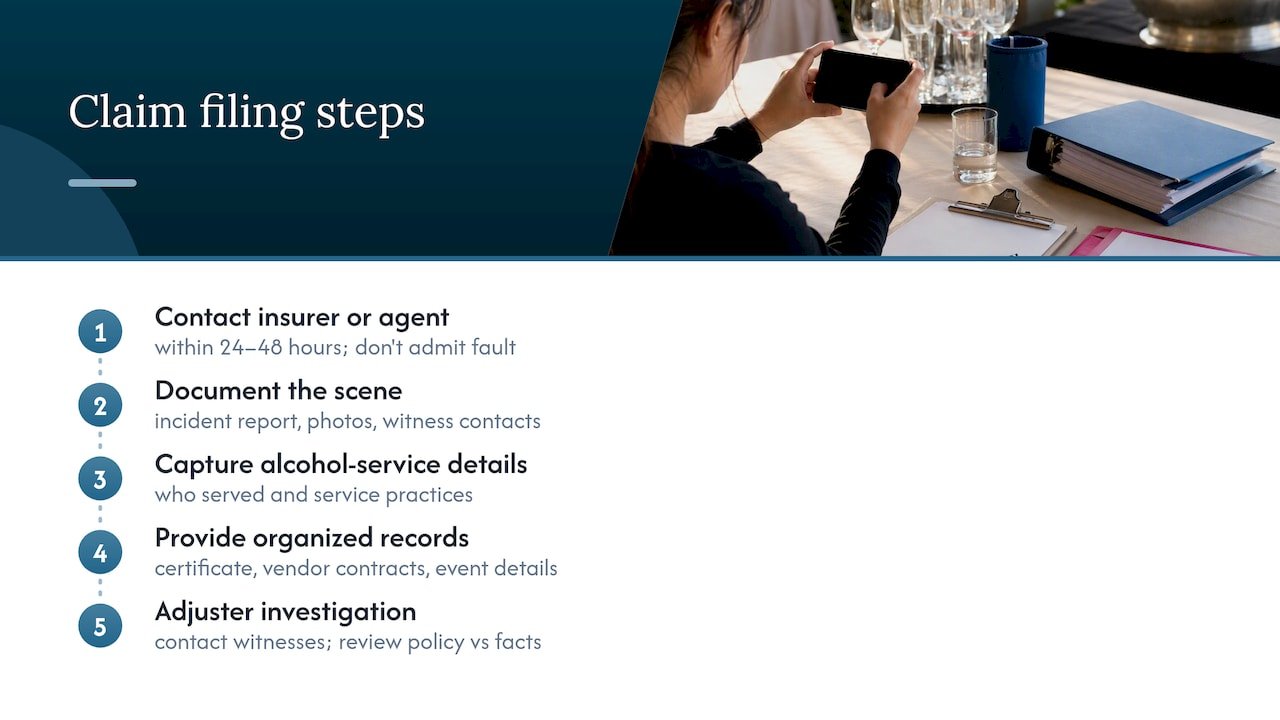
An adjuster investigates the claim, which can include contacting witnesses and reviewing your policy wording against the specific circumstances. Having your certificate of insurance, vendor contracts, and event details organized ahead of time speeds this process considerably. This is one place where working with a local agent pays off: they can walk you through what to document in the moment rather than leaving you to figure it out while dealing with an upset guest or a venue manager.
Private party or public event: how requirements differ
A private party and a public event are not insured the same way, even if both involve alcohol. A private party, say a backyard wedding reception for 80 guests, typically needs event liability with host liquor liability, and many venues accept $500,000 to $1 million in coverage.
A public event changes the picture substantially. Beer festivals, ticketed fundraisers, and community gatherings that sell alcohol usually require full liquor liability rather than the host version, since money is changing hands for drinks. Public events also tend to draw larger crowds, run longer, and involve more vendors, all of which push insurers toward higher limits, often $1 million per occurrence with $2 million aggregate or more depending on scale.
Public events held on municipal property or requiring a local permit may also need to meet the city’s own insurance minimums, which can exceed what a private host would ever be asked to carry. If you are organizing something public with alcohol sales, confirm requirements with both your venue and your local permitting office before you finalize your coverage, since the permit itself may dictate your minimum limit.
A local agent’s take on getting this right
Most coverage gaps we see come from timing, not ignorance. Hosts know they need insurance but wait until the week before the event, when certificate wording issues become a scramble instead of a quick fix. Buy your event liability and the correct liquor coverage as soon as you book your venue, then get that certificate into the venue’s hands early. A quick call to a local agent usually resolves wording questions same-day, and Savannah-area hosts work with us regularly for exactly this reason.
— Nathan
Get a fast event insurance quote from a local agent
We write event liability and liquor liability policies for hosts in the area, and we can usually turn around a certificate of insurance quickly once we have your event details. Whether you are hosting a private reception with a few dozen guests or organizing a larger gathering where alcohol is sold, we help you pick the right coverage and confirm your venue’s additional-insured wording before contracts get signed.
If you need a policy that fits your event’s specific risk, our commercial liability coverage options cover event and liquor liability needs for hosts and small businesses alike. Reach out to our team for a quote, and we will walk you through exactly what your venue requires and how fast we can get your certificate ready.
FAQ
How much is alcohol insurance for an event?
Pricing depends heavily on your limit, guest count, and whether alcohol is sold or served for free, with many short-term event policies priced well under a few hundred dollars for standard private-party limits. Your local agent can give you an exact figure once they know your event details.
How much does event insurance cost for a $1,000,000 event?
A policy with a $1 million per-occurrence limit is one of the most commonly requested amounts by venues, and pricing varies based on attendance, alcohol format, and event duration. Ask your agent for a quote using your specific event details, since no single number applies to every $1 million policy.
Do I need insurance to host an event?
Many venues require it before they will let you sign a rental contract, and your homeowners or renters policy typically will not cover alcohol-related incidents at a hosted event. According to NAIC guidance, you remain exposed even if your venue carries its own insurance, since that policy protects the venue, not you.
How much is a $1,000,000 liability policy?
Cost depends on your event’s size, duration, and whether alcohol is sold or simply served, along with the venue and activities involved. Getting a quote from a local agent is the fastest way to get an accurate number for your specific event.
Sources
- Event insurance – NAIC consumer guidance
- Liquor liability insurance: Coverage and costs — Forbes Advisor
Recommended
- Liquor Liability Insurance Guide: Coverage, Dram Shop Laws & Everything Alcohol Sellers and Servers Need to Know
- Liquor Liability Insurance Savannah GA
- Event Insurance Guide: Coverage, Event Types & Everything Hosts and Organizers Need to Know
- Liquor Liability Insurance in Savannah, GA: Does Your Business Need It?