
The fastest ways to get a lower home insurance premium are to shop carriers, raise your deductible responsibly, bundle policies, avoid small claims, improve your credit, and pursue mitigation discounts your insurer will actually verify. Each lever carries a tradeoff, usually more out-of-pocket risk or a change in limits, so talk to an agent about replacement-cost sizing before you cut anything.
TL;DR:
- Moving from a $500 to $2,000 deductible may save roughly $584 yearly, with break even typically under three years, if savings cover it.
- Identical coverage can cost 40% to 60% more across carriers, so compare quotes using matching limits, deductibles, endorsements, and discounts at every renewal.
- Use replacement cost, not market value, to set dwelling limits; actual cash value subtracts depreciation and can leave a large rebuilding shortfall.
- Ask insurers which upgrades qualify, what proof they require, and when credits begin; monitored alarm discounts may not justify fees that exceed savings.
- Tell your agent before a home sits empty, because standard policies may restrict vandalism, theft, or water damage after a carrier specific vacancy period.
Table of Contents
- Which quick actions can you start on today?
- How does a higher deductible lower your premium?
- Which discounts are worth asking for?
- What home upgrades do insurers reward?
- How do credit and claims history affect your rate?
- Are your coverage limits matched to replacement cost?
- How do you shop and negotiate quotes?
- Why are premiums rising, and why does it matter to you?
- Does a monitored security system lower your premium?
- How do vacant homes and seasonal use change your rate?
- Can green or energy-efficient upgrades earn insurance credits?
- Which add-ons and endorsements can you drop?
- What does a Savannah agent recommend before you cut coverage?
- How can we help you lower your premium in Savannah and beyond?
- FAQ
- Sources
Which quick actions can you start on today?
Start with the moves that cost nothing but a little of your time. Then decide which deeper sections deserve your attention based on your own situation.
- Get quotes from licensed carriers or an independent agent, using the same limits and deductibles on each.
- Raise your deductible only if you hold emergency savings that cover the new amount.
- Price a home and auto bundle against two separate policies.
- Ask about security system, claims-free and paid-in-full discounts by name.
- Skip filing small claims that fall at or just above your deductible.
- Pick mitigation projects your insurer recognizes, and confirm that before you pay a contractor.
- Check your credit report for errors, since credit plays into pricing in most states.
- Ask your agent whether any endorsement you pay for no longer fits your life.
How does a higher deductible lower your premium?
Your deductible is the amount you pay before the policy pays. Raise it, and the insurer takes on less of the early loss, so your premium drops. Many policies also carry a separate, percentage-based deductible for named perils such as hurricane wind, and NAIC consumer guidance notes that catastrophe deductibles work separately from your standard one. If you live near the coast, read our breakdown of the hurricane deductible before changing anything.
MoneyGeek’s analysis suggests that moving from a $500 to a $2,000 deductible may save roughly $584 a year, with a break-even point typically under three years. Your own numbers will differ, so run them:
- Get a premium quote at your current deductible and at the higher one.
- Subtract the two to find your annual savings.
- Divide the deductible increase by that annual savings. The result is your break-even time in years.
- Confirm you could pay the higher deductible from savings tomorrow without borrowing.
Pro Tip: If the break-even is short but your emergency fund is thin, raise the deductible in steps after you build savings, not before.
Which discounts are worth asking for?
Discounts stack differently from carrier to carrier and state to state, so ask directly instead of assuming they were applied. Triple-I’s consumer guidance shows insurers commonly reward security systems, bundling and long-term policyholders. Typical ones to raise with your agent:
- Bundling: Home plus auto is the most common. Compare the bundled total against separate policies, because the cheapest combined price is not always the one with a bundle label. Our guide to bundling home and auto insurance walks through examples.
- Security systems: Credit often depends on whether the system is monitored.
- Claims-free and loyalty: These reward a clean record and staying put.
- Paid-in-full: Paying the annual premium upfront can trim the total.
Insurers usually want paperwork: equipment receipts, monitoring contracts, or inspection records. Send documents when you apply, not after the first bill arrives.
What home upgrades do insurers reward?
Roof condition tends to matter most, followed by impact-resistant windows, storm shutters, and updated electrical and plumbing. In wildfire country, defensible space plays the same role. Water is a bigger Savannah worry, so keep gutters and downspouts clear. This seasonal gutter checklist explains when to DIY and when to call a pro.
Rules differ by insurer and state, so never pay for a project on the hope of a discount. Before you spend, run this check:
- Ask your carrier which upgrades earn a credit and how much.
- Get the documentation requirements in writing.
- Confirm whether an inspection or photos are required.
- Ask when the credit starts, at renewal or immediately.
Our agents also cover what inspectors look for in agent-approved steps.
Pro Tip: Fix small water damage out-of-pocket where you safely can. A guide to repairing water-damaged walls shows what that looks like, and it can spare you a claim.
How do credit and claims history affect your rate?
Most insurers use a credit-based insurance score, and in MoneyGeek’s 2026 analysis, which company you buy from and your credit score produced the largest premium differences. Some states limit how credit can be used, so ask your agent how it applies where you live.
Claims matter too. A claim usually stays on your record for years, and CNBC reporting notes that filing small claims can lead to higher premiums or even non-renewal. A small repair near your deductible may cost you more in future premiums than the check is worth.
- Pull your credit reports and dispute errors.
- Pay bills on time, every time.
- Hold off on small claims you can cover yourself.
- Build an emergency fund sized to your deductible.
Are your coverage limits matched to replacement cost?
Replacement cost value (RCV) pays to rebuild with new materials. Actual cash value (ACV) subtracts depreciation, so it costs less upfront, but NAIC’s consumer guide warns that ACV can leave large shortfalls when you file. Our primer on understanding your homeowners policy explains the difference in plain terms.
- Ask your agent for an updated replacement-cost estimate.
- Insure the structure, not the land under it.
- Take a home inventory so personal property limits fit what you own.
- Trim floaters for items you sold, and keep them for jewelry or art that matters.
How do you shop and negotiate quotes?
Triple-I reports that premiums for identical coverage can vary by 40% to 60% across carriers. That gap is your leverage.
- Contact several sources, including an independent agent and licensed carriers.
- Check licensing and complaint records through NAIC consumer resources.
- Collect the same details on every quote: dwelling limit, standard and catastrophe deductibles, endorsements, applied discounts, and financial ratings.
- Ask each carrier what else could lower the price, then confirm bundling and paid-in-full savings.
- Revisit the process at every renewal.
Why are premiums rising, and why does it matter to you?
Triple-I’s trends report points to disaster losses, rising replacement costs and inflation as forces pushing rates up and tightening underwriting. Carriers price those pressures differently, which is why shopping works. Mitigation helps from the other side, because it makes your home a better risk. Some state rules also limit what carriers can quote, so local knowledge counts.
Does a monitored security system lower your premium?
It can, but the details decide the discount. Insurers may treat alarm systems differently, from a local alarm that only makes noise to a centrally monitored system that alerts a response center for burglary, fire or both. Fire and water-leak detection tied to monitoring often count for more than burglary alone, because those losses are costlier.
Certification and documentation matter. Many carriers want a monitoring contract or a certificate from the alarm company showing the system is active, so keep copies and send them when you apply. If you cancel monitoring later, tell your insurer. Dropping it without notice may affect the credit, so check with your insurer before making a change.
Before you buy equipment, ask your carrier what it recognizes. Some will give credit for smart sensors and cameras; others only credit professionally monitored setups. Ask what percentage the credit is worth on your policy, then compare that annual saving to the monitoring fee. If the fee exceeds the discount, buy the system for safety and peace of mind, and treat the discount as a bonus, not the reason. And always compare the credit against your other options, such as a higher deductible, so you spend on the lever that pays back fastest.
How do vacant homes and seasonal use change your rate?
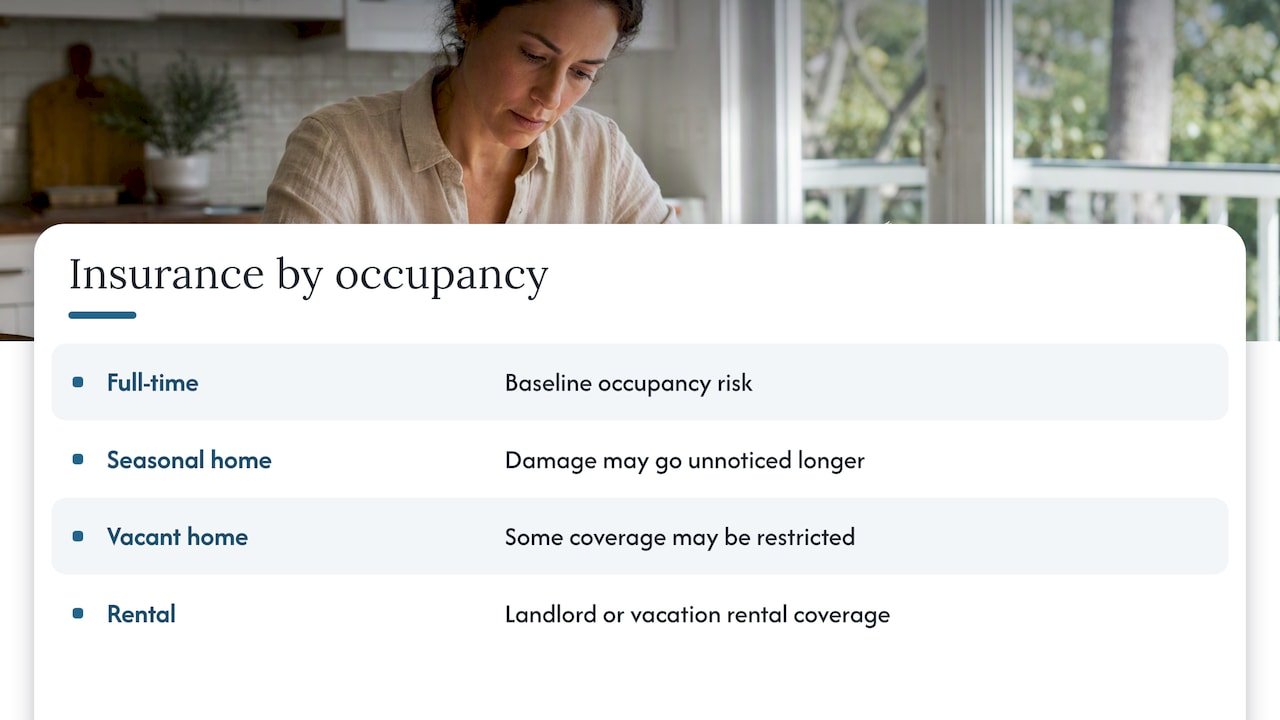
Insurers price occupancy, not just the building. A home you live in full-time is the baseline. A second home, a seasonal property, or a house that sits empty between owners or tenants is a different risk, because no one is there to spot a leak, a break-in or storm damage quickly.
Many standard homeowners policies restrict or suspend certain coverages after a home has been vacant for a set period, and the exact trigger varies by carrier. Vandalism, water damage from frozen or burst pipes, and theft are common places where vacancy limits show up. That means a quiet few months can leave you uncovered at the worst moment.
If your house will be empty, tell your agent before it happens. Depending on the situation, you may need a vacant property policy, a renovation endorsement, or a landlord policy instead of a standard homeowners form. If you are renting the home out, the right product is different again. We write vacation rental coverage for just that situation.
Small habits help in any season: have someone check the property regularly, shut off the water if you will be gone a while, and keep utilities connected. Document each visit with a quick photo and date stamp. Being open about how you use the home keeps your premium fair and your claim payable.
Can green or energy-efficient upgrades earn insurance credits?
Sometimes, though this is a narrower lever than most homeowners expect. Some insurers offer credits or endorsements for specific improvements, and others offer nothing. The upgrades that tend to matter most to an insurer are the ones that reduce loss, like a newer roof, updated wiring, or modern water shutoff devices, not the ones that cut your utility bill.
An efficient furnace or heat pump may earn recognition if it replaces an aging system with a fire or leak history. Solar panels cut in two directions: they add value to insure, and they can change roof and liability considerations. Tell your carrier before installing so the policy limits reflect the new equipment instead of discovering the gap after a loss.
Some carriers also offer green rebuild endorsements, which pay to rebuild with eco-friendly materials after a covered loss. That is a coverage add-on, not a discount, and it usually costs a little more. It can be worth it if you care about the standard, but price it honestly against your budget.
Here is the practical approach: ask your agent two questions. First, does my carrier credit any green or efficiency upgrade, and by how much? Second, what documentation do you need? If the answer is no credit, the upgrade should still pay for itself through lower utility bills or higher home value. If you only remodel for the insurance discount, run the math first, because that return is rarely large.
Which add-ons and endorsements can you drop?
Endorsements are extras attached to your base policy, and they accumulate quietly. Review them line by line at each renewal, and ask what each one covers and what it costs.
Common candidates for a second look:
- Scheduled items you no longer own: If you sold the ring or the camera, remove it.
- Overlapping coverage: Some riders duplicate protection you already have through another policy.
- Outdated limits: Home office or business property endorsements may no longer match how you work.
- Extra coverage on low-value property: Not every collection needs a separate floater.
Be careful in the other direction. Do not drop protection just because it is cheap. Water backup, ordinance or law coverage, and valuable-item floaters often protect against expensive, plausible losses. High-value jewelry, art and collectibles belong on a schedule, and our page on personal articles insurance explains how that works.
A good test: for each endorsement, ask what would happen if the loss occurred tomorrow and you did not have it. If the answer is a shrug, drop it. If the answer is a substantial bill, keep it. Then confirm the change with your agent in writing so the policy reflects what you decided, and nothing slips through at renewal.
What does a Savannah agent recommend before you cut coverage?
Savings that leave you underinsured are not savings. At Daly & Alexander, we recommend reviewing rebuilding costs, flood exposure and any separate wind deductible before changing coverage. Our advice is to start with a coverage review and a replacement-cost estimate, and only then pull the levers in this article. Talk to a licensed agent before you finalize any change.
— Nathan
How can we help you lower your premium in Savannah and beyond?
We pair local knowledge with a real review of your policy, so the savings you find do not cost you coverage when it counts. Here is what we can do for you:
- Quote your homeowners insurance and verify which discounts apply
- Run replacement-cost estimates and review your limits
- Price bundles with auto and umbrella coverage
- Advise on flood and excess flood needs

Request a personalized quote through our homeowners insurance page for Savannah, GA, or ask for a policy review today.
This article is general information, not a substitute for advice from a qualified financial advisor. Consult a qualified financial professional about your own circumstances before acting on anything here.
FAQ
How do I stop my home insurance from going up?
You can slow increases by shopping at every renewal, keeping your credit healthy, avoiding small claims and documenting upgrades. Rising costs also come from inflation and disaster losses, per Triple-I, so aim to slow the climb, not stop it.
Is $3,000 a year a lot for homeowners insurance?
It depends on your home’s replacement cost, location, roof age and deductible. Compare quotes with identical limits, because identical coverage can vary widely between carriers, per Triple-I.
What should I avoid saying to a home insurance company?
Never guess or guess loosely about damage, the home’s condition, or how it is used. Stick to documented facts, and give accurate details about occupancy and any business use so your coverage is not disputed later.
How much homeowners insurance do I need on a $400,000 house?
Base your dwelling limit on replacement cost, not market price, because market price includes land. Ask an agent for a replacement-cost estimate, and see our policy primer for how limits work.